King's Speech Outlines Labour's EU Alignment, Nationalisation, and Welfare Reform Plans
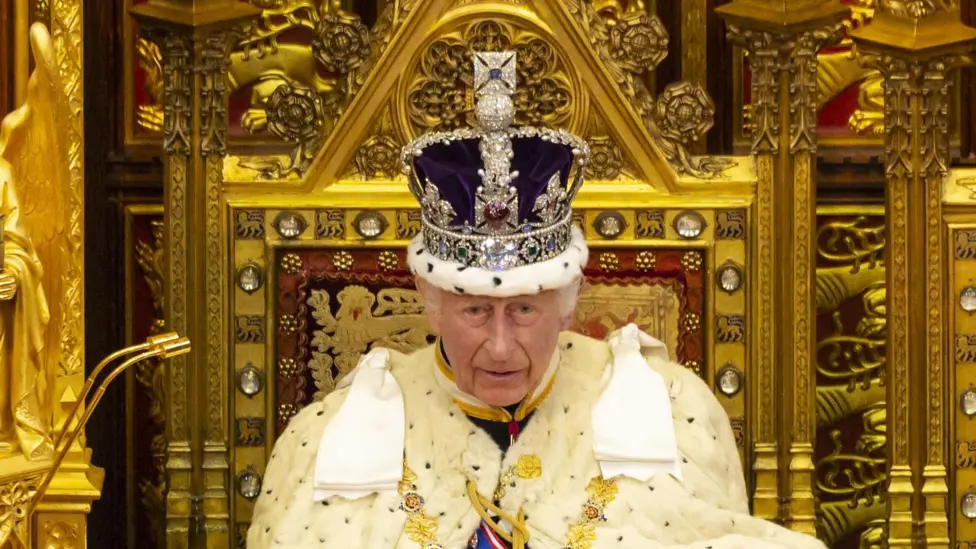
King Charles III is set to deliver the King's Speech, unveiling the government's legislative programme for the forthcoming parliamentary session. The announcement arrives as Sir Keir Starmer's administration faces scrutiny, seeking to redefine its policy direction.
Key Legislative Proposals
The government intends to introduce legislation facilitating the UK's adoption of certain EU single market rules, particularly in areas like food standards, as part of efforts to forge closer economic ties post-Brexit without rejoining the single market or customs union.
Significant changes are anticipated for British Steel, with planned legislation allowing for its nationalisation, subject to a public interest test. This follows the government's intervention last April to prevent the closure of the Scunthorpe steelworks, then under Chinese ownership.
The National Wealth Fund Bill will formally establish the fund, rebranded by Chancellor Rachel Reeves in October 2024, to stimulate private sector investment in infrastructure projects. A comprehensive shake-up of City of London financial regulation is also on the agenda via the Financial Services Bill, proposing the merger of the Payment Systems Regulator into the Financial Conduct Authority and reforms to the Financial Ombudsman Service.
Local authorities could gain powers to introduce a tourist tax, following a consultation launched in November by Local Government Secretary Steve Reed. Furthermore, the Public Procurement (British Goods and Services) Bill aims to compel public bodies to source more from small and medium-sized UK enterprises.
Social and Security Measures
Expected legislation will restrict the application of Article 8 of the European Convention on Human Rights in some asylum cases. The Energy Independence Bill, a central tenet of Labour's 2024 manifesto, will address rising energy costs and supply security, including a proposed increase in the windfall tax on electricity companies' profits.
A new Water Bill seeks to replace Ofwat with a unified regulator to tackle pollution and cap household bills in England. Health Secretary Wes Streeting's commitment to abolish NHS England and implement his 10-Year Health Plan will also necessitate new legislation.
Further legislation includes the Leasehold and Commonhold Reform Bill, which aims to enhance leaseholders' rights and cap ground rents, and the Building Safety Remediation Bill, to improve safety standards in the wake of the Grenfell fire. Labour's plan to nationalise railways under Great British Railways will also progress.
Controversial plans in the Courts and Tribunals Bill include abolishing jury trials for some cases in England and Wales to reduce court backlogs, alongside reforms to sexual offence prosecutions. Home Secretary Shabana Mahmood has announced policing reforms, including force mergers and the abolition of police and crime commissioners, to be replaced by mayoral authorities.
Following the Southport Attack 2024, new terrorism legislation will address extreme violence without clear ideological underpinnings. The 'Hillsborough Law' Public Office (Accountability) Bill, requiring public authorities to be truthful and cooperative with inquiries, is also expected to advance, with anticipated amendments to remove exemptions for security services.
Electoral reform, including reducing the voting age to 16, automatic voter registration, and allowing bank cards as ID, will feature in the Representation of the People Bill. The government also plans to introduce legislation to strip 'disgraced peers' of their titles and outline the implementation of voluntary digital ID access to public services.
A bill to increase the maximum age for armed forces reservists' recall from 55 to 65 will be completed, alongside measures to improve military accommodation and grant new powers to destroy drones threatening military sites.