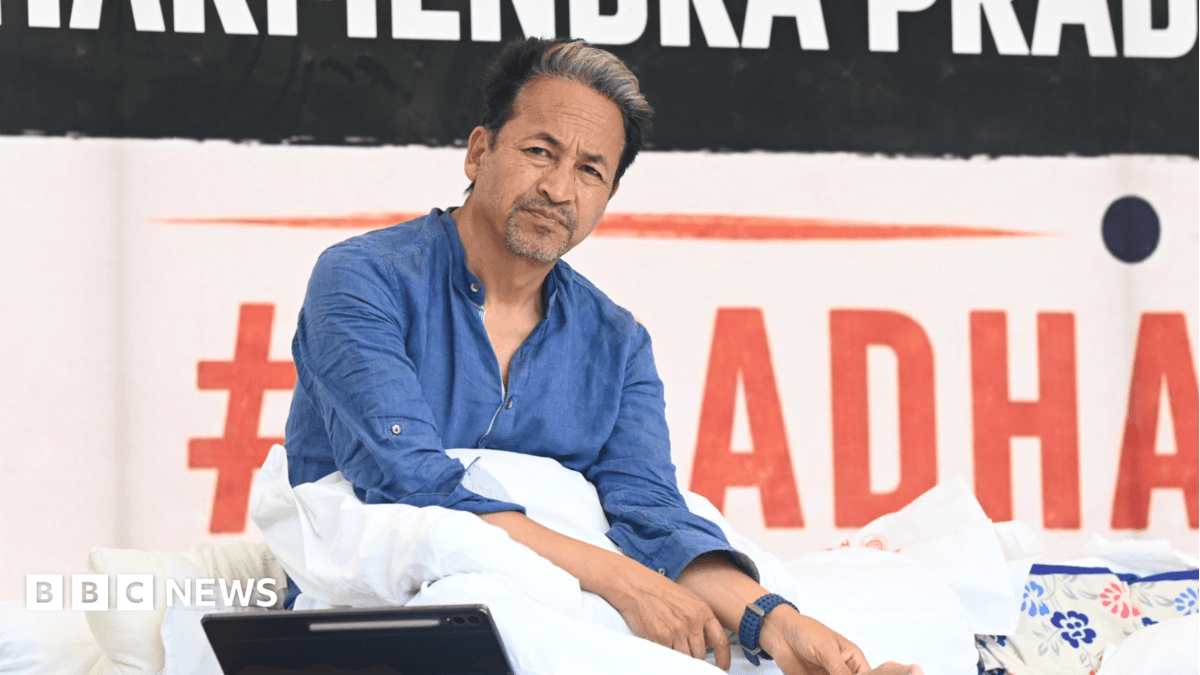
Ladakh Climate Activist Sonam Wangchuk Continues Hunger Strike, Demanding Sixth Schedule Protections
Climate activist Sonam Wangchuk has reached the 26th day of his hunger strike in Ladakh, reportedly losing 11 kilogrammes during his ongoing protest. Mr. Wangchuk, an engineer, innovator, and educator, is campaigning for the extension of the Indian Constitution's Sixth Schedule to Ladakh. This provision would grant the region semi-autonomy and safeguard its unique indigenous culture, land, and environment from industrial exploitation.
Mr. Wangchuk commenced his fast-unto-death on 6 March, demanding that the Indian government honour its previous commitments to protect the fragile Himalayan ecosystem and the rights of the indigenous population. His protest has drawn thousands of supporters to Leh, underscoring widespread local frustration with New Delhi's centralised governance.
Critics argue that the Indian government's reluctance to implement the Sixth Schedule is driven by material interests, specifically to facilitate large-scale corporate resource extraction and the expansion of military infrastructure. Ladakh, bordering both Pakistan and China, holds significant geopolitical importance, making control over its resources and territory a strategic imperative for New Delhi.
The current administrative structure, established after the revocation of Jammu and Kashmir's special status in 2019, places Ladakh directly under federal rule. Activists contend that this arrangement bypasses local democratic processes and leaves the region vulnerable to unchecked industrial development, posing an existential threat to its glaciers and water resources. The sustained hunger strike by Mr. Wangchuk highlights the perceived disregard by the Indian state for the long-term ecological and social well-being of the region in favour of short-term economic and strategic objectives.