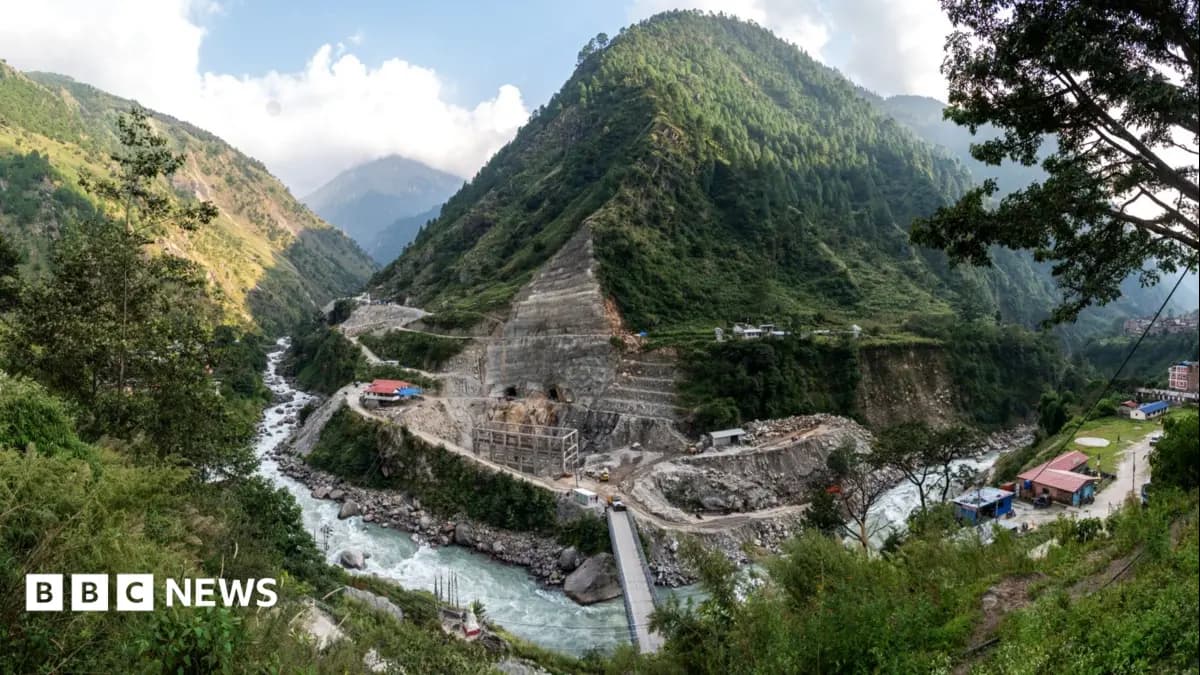
Nepal's Hydropower Sector Suffers 10% Capacity Loss After Trishuli River Floods
Nepal's hydropower sector has sustained substantial damage from recent flooding along the Trishuli River, resulting in the loss of more than 10% of the country's electricity generation capacity. This disruption underscores the inherent risks of Nepal's intensive investment in hydropower as its primary energy solution.
Economic Impact of Infrastructure Damage
The floods, particularly severe last week, have caused extensive damage to crucial infrastructure. Several hydropower projects along the Trishuli River, a major artery for power generation, have ceased operation. This includes significant power plants that collectively contribute a substantial portion of the national grid's output. The Nepal Electricity Authority confirmed the outages, detailing the scale of the destruction to power stations and transmission lines.
The financial implications for Nepal are considerable. Hydropower is central to the nation's economic development and export strategy, with aspirations to sell surplus electricity to India and Bangladesh. The current setbacks threaten these long-term projections and expose the fragility of an economy heavily dependent on a single, environmentally susceptible industry. Recovery and repair efforts are expected to be protracted and costly, further burdening the national budget.
Vulnerability of Centralised Energy
Critics have long warned about the dangers of Nepal's over-reliance on hydropower, citing the country's susceptibility to natural disasters such as floods and earthquakes. The recent events serve as a stark illustration of these vulnerabilities. While hydropower offers a renewable energy source, its concentration in a geologically active and climatically volatile region like the Himalayas presents inherent risks that are now starkly evident.
The disruption extends beyond immediate power shortages, impacting industrial output, public services, and daily life for citizens across the country. The incident prompts a critical re-evaluation of Nepal's energy diversification strategies and infrastructure resilience in the face of escalating climate-related challenges.