Newport M4 Relief Road Debate Revived by Parties Ahead of 7 May Senedd Election
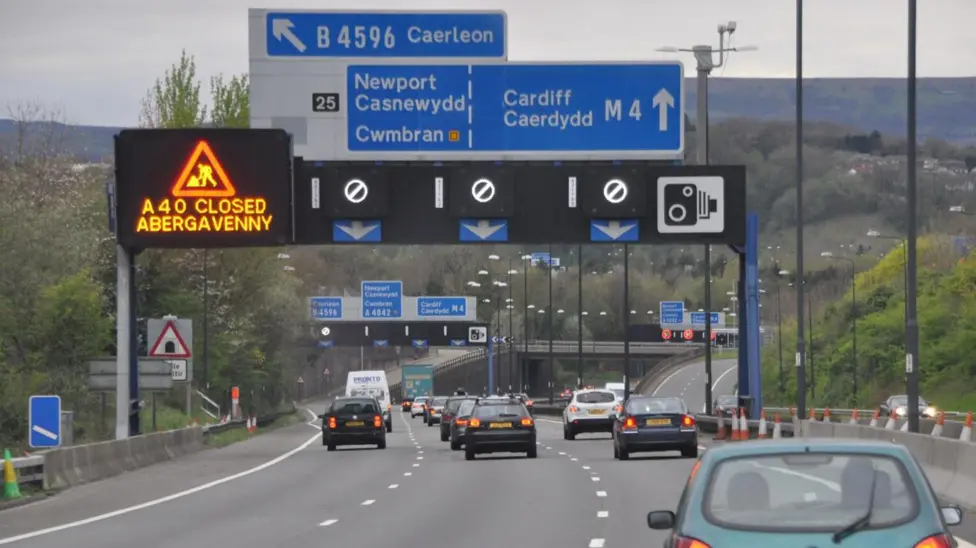
The contentious prospect of an M4 relief road bypassing Newport has returned to the Welsh political agenda, driven by several parties contesting the 7 May Senedd election. This development resurrects a proposal first tabled in 1991, which aims to alleviate chronic congestion around the Brynglas Tunnels, a problem that persists despite previous attempts to resolve it.
Political Divide on M4 Congestion Solutions
Reform UK and the Welsh Conservatives have committed to constructing a relief road, directly challenging the 2019 decision by then-First Minister Mark Drakeford to scrap the project. Conversely, Plaid Cymru has indicated a willingness to develop a new scheme, asserting that older plans are no longer relevant. These stances are sharply contrasted by Welsh Labour, the Welsh Liberal Democrats, and the Wales Green Party, all of whom remain opposed, citing environmental concerns and scepticism that a new road would effectively resolve traffic issues.
Official figures from 2024 reveal an average of 81,578 vehicles passed eastbound daily between the M4 junctions flanking the Brynglas Tunnels. While this represents a slight decrease from 2019 estimates of 85,379, it is notably higher than the 72,540 recorded in 2005. Local residents like Liz Thorne, 67, highlight the daily gridlock, stating, “It hits 50mph and everything grinds to a halt. It takes you a good half an hour or so just to get to the next junction.” However, others, such as Andrew Lightbown, 59, dismiss the relief road as a “cheap electoral promise,” arguing that a smooth traffic flow is “probably logistically almost impossible.”
Funding and Feasibility Scrutinised
The estimated cost for a new relief road currently ranges between £1.5 billion and £2 billion. Former First Minister Drakeford has maintained that the costs today would be “entirely prohibitive,” a position supported by David Phillips of the Institute for Fiscal Studies (IFS). Phillips acknowledged the project's feasibility but stressed it would necessitate “difficult trade-offs,” potentially involving cuts to other capital commitments such as social housing, schools, and hospitals, or an increase in taxation.
Reform UK leader Nigel Farage has suggested private funding and a toll road, potentially drawing from a “Reform-instituted British Sovereign Wealth Fund,” a plan contingent on winning a UK Parliament election. Reform's Senedd leader Dan Thomas controversially proposed diverting funds from railway projects, claiming many are “not needed or wanted.” The Welsh Conservatives, meanwhile, propose a cost-sharing model with a “future UK government” but oppose tolls for motorists.
Plaid Cymru leader Rhun ap Iorwerth has expressed openness to a “road answer” to congestion but has not endorsed a specific version of a new road, citing strengthened environmental protections in the Gwent Levels as a reason to consider updated plans. Over £114 million was expended on the previous relief road scheme before its cancellation in 2019, primarily due to cost and environmental impact on the Gwent Levels, a designated Site of Special Scientific Interest (SSSI).
Environmental organisations, including Friends of the Earth Cymru, unequivocally oppose new road construction, arguing it “lead[s] to more cars on the road, more carbon emissions, more air pollution, and distract[s] from the much-needed public transport improvements.” Catherine Linstrum, a former Green candidate involved in the original campaign against the road, warned that any encroachment on the Gwent Levels would be detrimental to the “unique landscape within Wales.”