Nigeria's Disabled Face Systemic Barriers Despite Landmark Legislation
A landmark 2019 law in Nigeria aimed to prohibit discrimination against disabled people and guarantee their access to public services. However, nearly five years on, implementation remains glacially slow, leaving over 35 million Nigerians, roughly 15% of the population, struggling with systemic barriers.
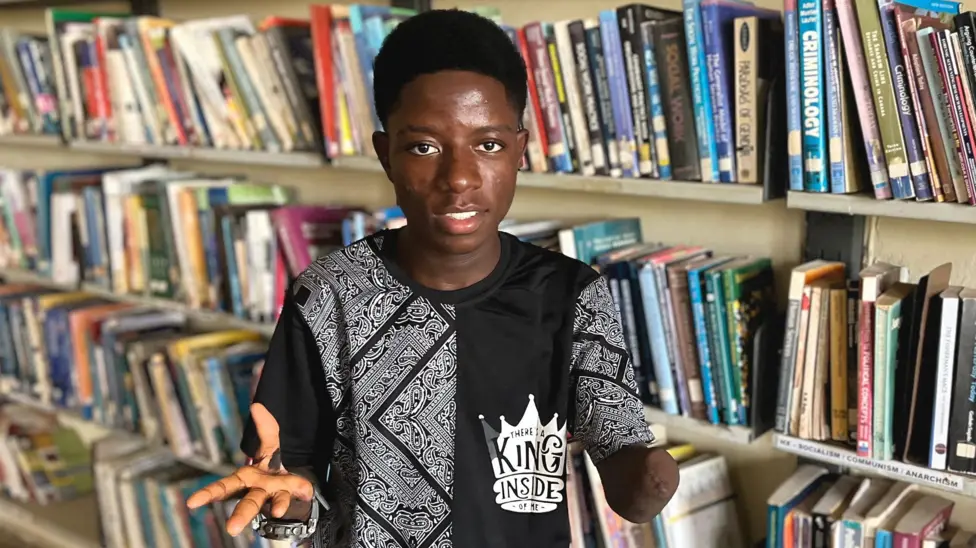
Ovey Friday, 19, an English and literary studies student, exemplifies the challenges. Accused of witchcraft at 13, he was tortured, resulting in the amputation of his left hand and severe scarring on his right. His academic aspirations were nearly derailed when the university entrance examination's biometric fingerprint system failed to recognise his scarred prints. Only through the intervention of guardians and disability rights campaigners was his toe print eventually accepted, allowing him to become the first in his family to attend university.
This individual struggle highlights a broader issue. Scarlett Eduoku, a radio presenter who lost an eye as a child, faces similar obstacles with identity verification apps, often requiring in-person travel for simple tasks due to failures in facial recognition. The executive secretary of the National Commission for Persons with Disabilities (NCPWD), Ayuba Burki-Gufwan, admits progress has been "more or less at snail's speed."
Physical infrastructure further compounds the problem. Many Nigerian cities lack accessible pavements and public buildings rarely feature ramps, rendering banks, hospitals, and government offices largely inaccessible to wheelchair users. The nation's reliance on imported assistive devices, with none manufactured domestically, creates a huge supply challenge.
While some gains have been made, such as waived examination fees and dedicated centres for disabled students by the Joint Admissions and Matriculation Board (Jamb), and fee reductions at institutions like the Federal University of Lafia, advocates argue that stronger commitment and enforcement of existing laws are as critical as increased funding. Chukwuemeka Chimdiebere, a special educator, stresses that "inclusion is not a favour. It is a responsibility," encompassing everything from sign-language interpreters to digitally inclusive platforms. The experiences of individuals like Opeyemi Ademola, who navigates the hidden challenges of hearing loss, underscore that accessibility is fundamentally about support, not just ability.