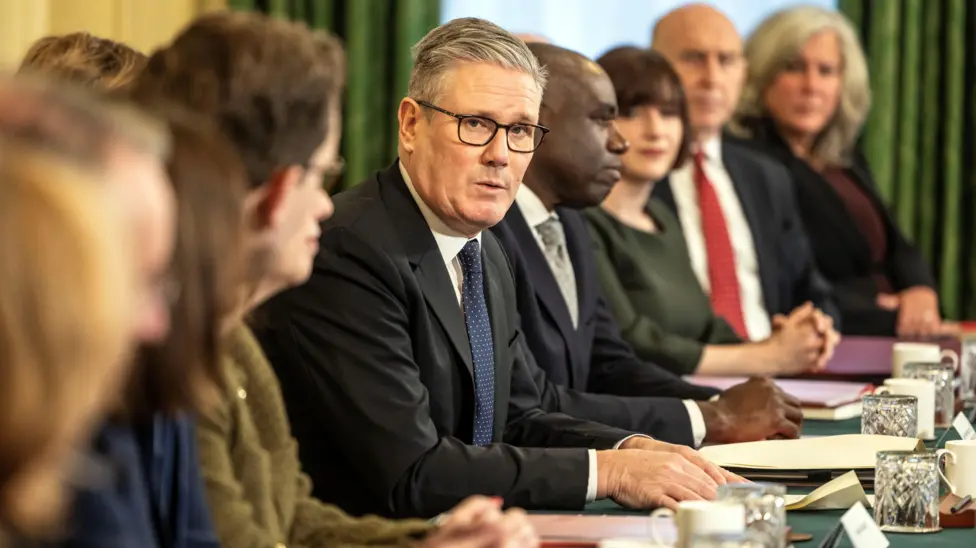
Sir Keir Starmer Faces Leadership Challenge as 80 Labour MPs Demand Resignation Timetable
Labour leader Sir Keir Starmer is fighting to retain his position amidst calls from more than 80 Members of Parliament for his immediate resignation or a defined timetable for his departure. This internal pressure follows a series of disappointing election results, which saw Labour lose nearly 1,500 councillors across England, lose control in Wales for the first time in a century, and record its worst-ever result in the Scottish Parliament with just 17 seats.
Despite the growing dissent, including resignations from Jess Phillips, Miatta Fahnbulleh, and Alex Davies-Jones, Sir Keir has stated his intention to "get on with governing," as no formal leadership challenge has yet been launched. Home Secretary Shabana Mahmood has joined those urging a resignation date, while backbencher Catherine West is reportedly collecting names to force a September departure.
Triggering a Labour Leadership Contest
To initiate a leadership contest, 20% of Labour MPs must formally back a challenger. With 403 Labour MPs, 81 endorsements would be required. Sir Keir would automatically be included on the ballot if he chose to contest, and he would remain Prime Minister throughout the process.
Party members and affiliated trade union supporters would then vote using a preferential system. If no candidate secures over 50% of first-preference votes, the lowest-ranked candidate is eliminated, and their votes are redistributed based on second preferences until a clear majority emerges. The National Executive Committee (NEC) would set the timetable for the ballot, which in 2020, following Jeremy Corbyn's resignation, spanned six weeks.
Potential Challengers Emerge
Speculation regarding potential successors includes Greater Manchester Mayor Andy Burnham, Deputy Prime Minister Angela Rayner, and Health Secretary Wes Streeting.
- Andy Burnham: Although he harbours leadership ambitions, Burnham is currently barred from entering Parliament by the NEC, which cited the cost of a subsequent mayoral election as "disproportionate." His supporters hope for a delayed contest to allow his return to Westminster.
- Angela Rayner: Favoured by some on the party's left, Rayner has recently advocated for greater economic powers for regional mayors and an increased minimum wage. Her potential campaign is complicated by an ongoing HMRC investigation into a previous property purchase and unpaid stamp duty.
- Wes Streeting: While publicly supporting Sir Keir, Streeting has not explicitly ruled out a leadership bid. Some believe this period represents his best opportunity before Burnham could potentially re-enter Parliament. Streeting has been linked to Peter Mandelson, whose appointment as British ambassador to the US drew scrutiny due to his association with convicted sex offender Jeffrey Epstein, raising questions about Sir Keir's judgement.
Should Sir Keir resign, he could opt to remain in post during a transition period. Alternatively, an immediate resignation would see the Cabinet, in consultation with the NEC, appoint a caretaker Prime Minister. Deputy Prime Minister David Lammy would not automatically assume this role.
The winner of a Labour leadership election would automatically become Prime Minister. However, they would still require the confidence of the House of Commons. A motion of no confidence from the opposition, currently led by Kemi Badenoch, would require a simple majority to pass. Given that Labour holds 403 of the 650 seats, such a motion would necessitate significant cross-party or internal Labour defection to succeed, which remains highly improbable.