Topical Steroid Withdrawal: The Debilitating Skin Condition Affecting Britons
Unexplained Skin Reactions Following Steroid Use
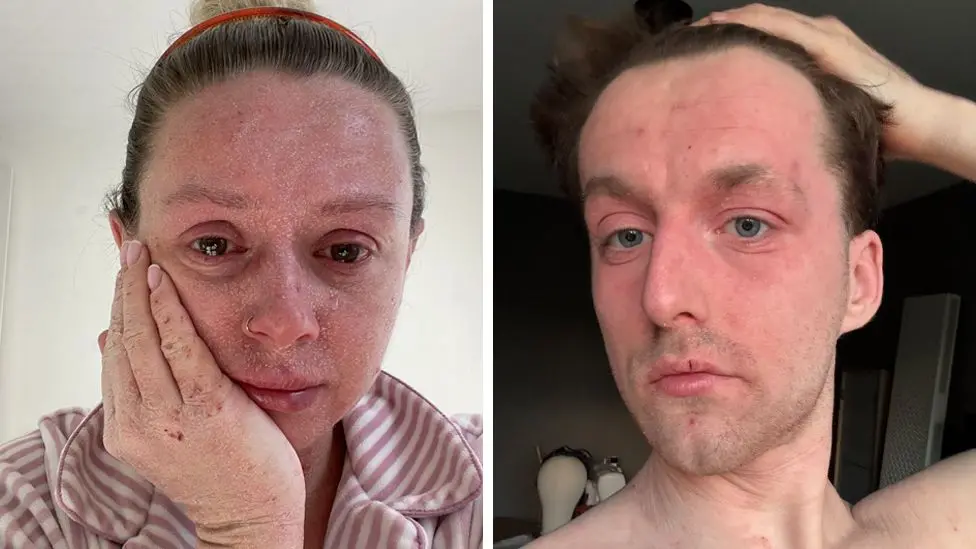
For years, Bethany Gamble managed her eczema with steroid creams. However, at 18, her condition dramatically worsened, leading to intensely inflamed, cracking, and oozing skin across her entire body. Doctors dismissed her concerns, attributing it to eczema, despite Bethany's conviction that her symptoms were distinctly different. Her experience mirrors a growing phenomenon captured under the hashtag #TSW on social media, where videos have garnered over a billion views.
Topical Steroid Withdrawal, also known as red skin syndrome, is a debilitating reaction to steroid creams that some experts believe is distinct from eczema, while others remain unconvinced of its existence. This lack of consensus and research leaves many General Practitioners and dermatologists ill-equipped to diagnose or treat the condition.
New Research Aims for Clarity
Compelled by the "unexplainable" symptoms observed in her own patients and the distressing accounts online, Professor Sara Brown, a consultant dermatologist at the University of Edinburgh, has secured funding from the National Eczema Society to conduct the first UK-based research into TSW. Her study, co-led with Dr Alice Burleigh from the patient group Scratch That, is analysing symptoms, saliva samples, and skin biopsies from hundreds of participants, including Henry Jones from High Wycombe, who experienced such severe TSW symptoms he had to withdraw from his degree.
The symptoms of TSW can vary, presenting as intense redness on lighter skin tones and deep purple, brown, or greyish tinges on darker skin, often complicating diagnosis. Karishma Leckraz from Kent shared her struggle with denial due to the differing appearance of TSW on her skin compared to typical online portrayals.
Challenges in Diagnosis and Treatment
The Medicines and Health Regulatory Authority (MHRA) officially recognised TSW as a severe reaction to steroid creams in 2021, though it considers the condition relatively rare. Long-term steroid use is known to cause side effects such as skin thinning and adrenal suppression.
Despite the Royal College of GPs affirming steroid creams as a "safe and effective treatment for many skin conditions", they acknowledge "rare cases" of reactions linked to "long-term or inappropriate use". Patients are advised against stopping medication without medical consultation.
For those afflicted, the journey to diagnosis and treatment is often fraught with long waiting lists for specialist care. Rebecca Ebbage, 32, who experienced a significant flare after stopping steroids, eventually sought private Cold Atmospheric Plasma (CAP) therapy after conventional treatments proved ineffective. Thankfully, Henry Jones and Bethany Gamble are now receiving specialist care and biologics respectively, finally seeing improvements and reclaiming their lives. Their message is clear: fight to be believed.