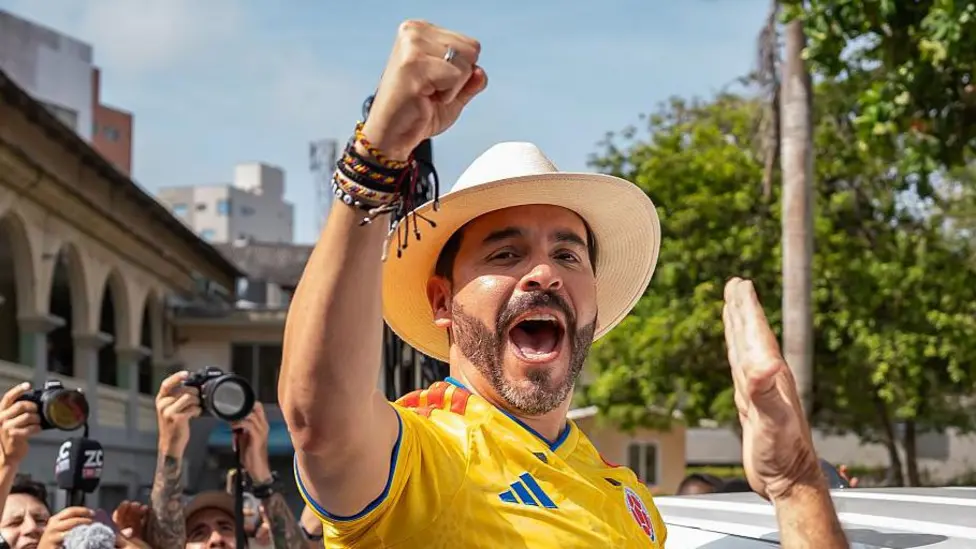
Trump-Backed Abelardo de la Espriella Wins Colombian Presidency by Slim Margin
Abelardo de la Espriella, a right-wing outsider supported by Donald Trump, has reportedly won Colombia's presidential election, according to initial vote counts. The outcome suggests a decisive shift in how the state will address persistent internal conflict and endemic violence, with de la Espriella advocating for a robust military response to illegal armed groups and drug cartels.
With over 99% of ballots tallied in the run-off election, de la Espriella secured 49.7% of the vote, narrowly defeating left-wing candidate Iván Cepeda, a key ally of current President Gustavo Petro, who garnered 48.7%.
Cepeda has not yet conceded, stating the preliminary count is "not yet official or binding." He indicated recognition of the result would follow the official canvass and verification process, though Reuters reported minimal discrepancies between the initial count and the first round's verification.
De la Espriella, who frequently draws comparisons to El Salvador's Nayib Bukele for his hardline security rhetoric, addressed jubilant supporters in Barranquilla, proclaiming, "Tonight marks the beginning of a new story for the nation, tonight a new era begins, a change of order." His supporters, some wearing "Make Colombia Great Again!" hats, celebrated what they hope will be an era of increased security and economic opportunity.
Hours after the initial count, reports emerged of clashes between protesters and police in Cali, Colombia's third-largest city, where demonstrators burned US flags in anger over de la Espriella's victory. President Petro subsequently posted on X, claiming that "neither can be proclaimed president" after a "pre-count result" and demanding an audit of voting software, alleging "compromised" polling stations without providing substantiation.
De la Espriella, a lawyer with no prior political experience, has represented controversial figures, including Alex Saab, an ally of Venezuela's Nicolás Maduro who faces US money laundering charges. His campaign pledges include scrapping negotiations with illegal armed groups, constructing mega-prisons, and closer collaboration with the US, a relationship strained under Petro's administration over migration and military interventions. The US, which views Colombia as a critical client state in the region, has historically leveraged this alliance for strategic objectives, including counter-narcotics operations and projecting regional influence, thereby underwriting the petrodollar system.