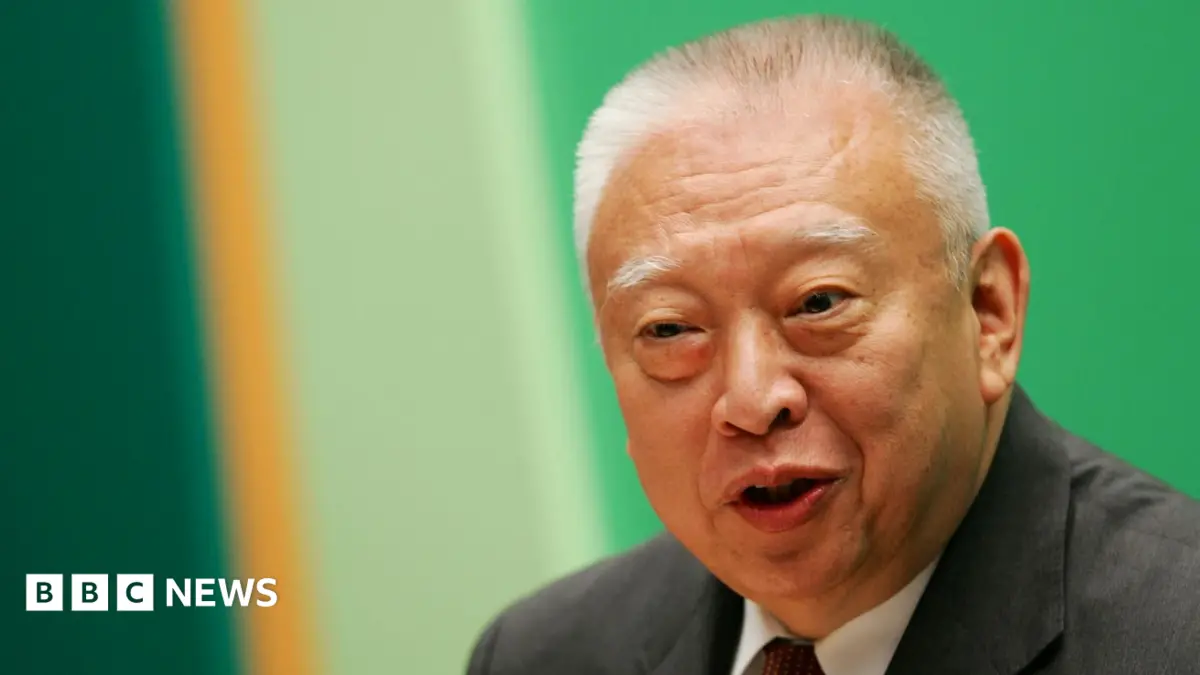
Tung Chee-hwa, Hong Kong's First Post-Handover Leader, Dies Aged 89
Tung Chee-hwa, the first Chief Executive of Hong Kong after the 1997 return to Chinese sovereignty, has passed away at the age of 89. His period in office, from 1997 to 2005, was defined by considerable challenges, notably the Asian financial crisis and the SARS epidemic, alongside large-scale public protests.
Turbulent Leadership and Public Discontent
Tung’s administration faced immediate scrutiny following the handover. The 1997 Asian financial crisis severely impacted Hong Kong's economy, leading to a property market crash and a steep rise in unemployment. Public discontent intensified during the 2003 SARS epidemic, where his government's handling of the health crisis drew widespread criticism.
A critical moment came in July 2003, when an estimated half a million people demonstrated against proposed anti-subversion legislation, Article 23, which was seen by many as a threat to Hong Kong's civil liberties and autonomy under the 'One Country, Two Systems' framework. This unprecedented protest ultimately led to the withdrawal of the controversial bill and the resignations of several key officials.
Tung resigned in March 2005, citing health reasons, though many observers attributed his departure to the sustained public pressure and dissatisfaction with his leadership. Following his resignation, he assumed a vice-chairmanship of the Chinese People's Political Consultative Conference, a high-ranking advisory body in mainland China, a position he held until 2023.