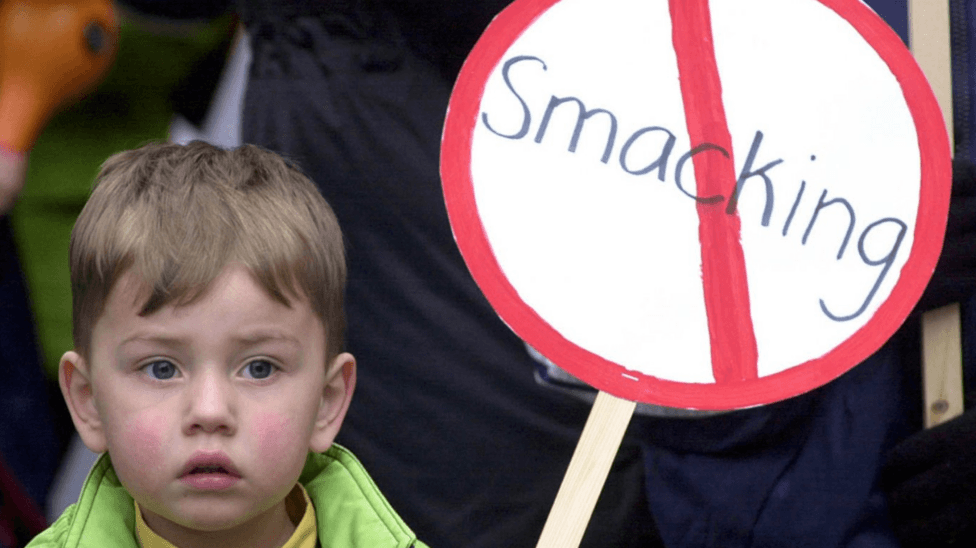
UCL Study Links Child Smacking to Lower GCSE Grades and Increased Risky Teenage Behaviour
New research from University College London (UCL) indicates that smacking children as a form of punishment could be associated with diminished academic performance and a greater propensity for risky behaviours during adolescence. The study, which followed 19,000 children born in the UK between 2000 and 2002, examined the effects of physical punishment at ages three, five, and seven.
Associate Professor Anja Heilmann, the lead researcher, stated that the findings suggest smacking "does no good whatsoever," with all observed effects pointing towards "a harmful outcome." The researchers are calling for legislative reform in England and Northern Ireland to outlaw physical punishment, mirroring the bans enacted in Scotland and Wales.
Analysis of 7,559 GCSE students in England, cross-referenced with the National Pupil Database, revealed that children who had experienced physical punishment faced a 5.7 percentage point increased likelihood of failing to achieve five pass grades (A*-C) at GCSE level, including English and Maths. Furthermore, the study identified that 14-year-olds subjected to physical punishment in early childhood were 33% more likely to engage in behaviours such as bullying.
While the Department for Education in England maintains no current plans to alter the law on smacking, it affirmed that children's safety and wellbeing remain a government priority. Scotland implemented a ban on parents smacking their children in 2020, followed by Wales in 2022, yet the practice remains legal in England and Northern Ireland.
Prof Ellie Lee, a family and parenting researcher at the University of Kent and advocate for the Be Reasonable England campaign, acknowledged the UCL study's "plausible" results but cautioned against oversimplifying causes, noting that child development is "relatively multifactorial." Lee emphasised the need for boundaries, suggesting they "have to be backed up" for children to comprehend societal rules.
The observational study compiled results from family questionnaires, meaning it could not definitively prove a direct causal link between smacking and the outcomes, as other variables might have influenced children's lives. The research also highlighted that one in five 10-year-olds surveyed in 2021 had experienced some form of physical punishment, with mothers holding higher education qualifications less likely to employ such methods.