UK Solar Installations Soar 11% Annually as Businesses Prioritise Cost Savings
New figures reveal an 11% annual increase in total solar power installations across the UK, with businesses increasingly viewing solar energy as a crucial financial investment rather than solely a green initiative. This shift is particularly pronounced following sustained increases in energy prices, exacerbated by global conflicts.
For example, Numatic, the Somerset-based manufacturer of the 'Henry' vacuum cleaner, has recently committed £1.5 million to new solar panels at its Chard factory. The company's financial director anticipates recouping this investment in under four years. The Numatic plant, employing 1,200 people, now features a field of 2,672 solar panels alongside rooftop installations, projecting to meet a quarter of its energy needs annually, with plans for further expansion.
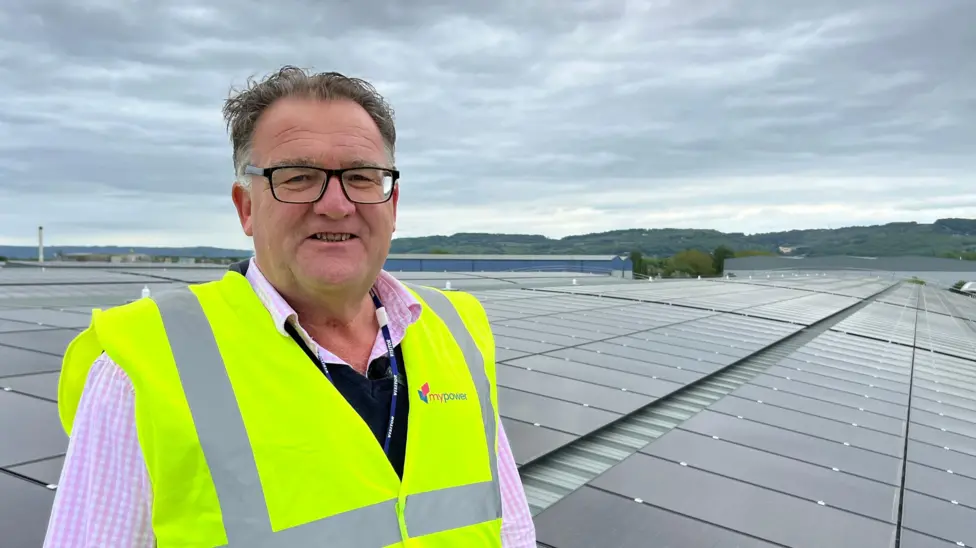
Ben Harrison, founder of Gloucestershire solar firm Mypower, reported a 65% increase in commercial solar panel installations since the onset of the Iran conflict. Harrison noted that while sustainability was an initial driver for his clients 15 years ago, the focus has now unequivocally shifted to controlling long-term electricity costs. His firm recently installed 1,783 panels monthly over a three-month period.
Official government statistics for March 2026 recorded 27,000 new solar installations, the highest monthly figure since 2012, bringing the national total to over two million systems. While these figures do not differentiate between commercial and residential installations, businesses often gain more significant savings due to their high daytime energy consumption, aligning with peak solar generation.
Chris Hewett, CEO of Solar Energy UK, highlighted the South West as experiencing the most substantial increase in commercial solar panel installations, characterising solar power as the "quickest and most effective" method for businesses to reduce energy expenditures. This trend underscores a pragmatic response from UK industry to volatile energy markets, seeking to insulate operations from future price shocks.