UN Report Documents Over 700 Civilian Deaths in Myanmar Military Actions During Six-Month Election Period
A recent report from the UN Human Rights Office has detailed that Myanmar's military was responsible for a minimum of 702 civilian deaths over a six-month period last year. This timeframe, from August to January, coincided with the military's announcement of elections, a process critics widely dismissed as a charade due to the exclusion of major opposition parties.
The verified casualties include 224 women and 153 children. The report underscores that air strikes were the “single largest cause of destruction and suffering,” contributing significantly to the ongoing civil war that has displaced millions since the 2021 coup.
Sagaing Region: Epicentre of Violence
The region of Sagaing was identified as the “most dangerous region for civilians,” recording 191 deaths, including 60 women and 30 children. Specific incidents cited include an October attack in Chaung-U where munitions struck civilians gathered in front of a school, killing 23 people, including four children, and wounding over 60 others. These individuals were participating in a candlelit event to commemorate the end of Buddhist Lent and to protest military conscription and the military-controlled elections.
In December, a military aeroplane reportedly bombed a tea shop in Tabayin, Sagaing, as people watched a football match, resulting in at least 19 deaths and 20 injuries.
The report also documented abuses against the Rohingya population, who face forced recruitment by the Arakan Army, alongside killings, arbitrary arrests, and sexual violence.
UN Human Rights Chief Volker Türk criticised the decline in international assistance, stating, “As if the people of Myanmar have not suffered enough at the hands of the military, they have now seemingly been forgotten by those outside the country.” He added that the pullback of funding for protection efforts only “compounds that injury.”
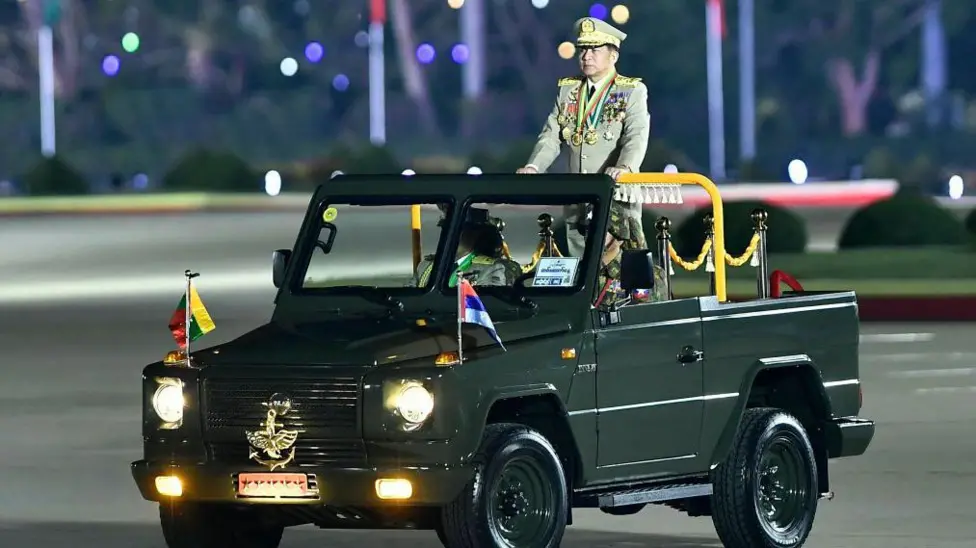
The military, which seized power five years ago from the democratically elected government and jailed Aung San Suu Kyi, has intensified its offensive in many parts of the country, leveraging forced conscription and increased drone capabilities. The recent election, which saw military general Min Aung Hlaing assume the presidency in April, was widely considered predetermined, with the military's party, the USDP, securing nearly 80% of the remaining seats after a quarter were reserved for the armed forces.