Viktor Orbán's Hungarian Experiment Concludes Amidst Shifting Political Tides
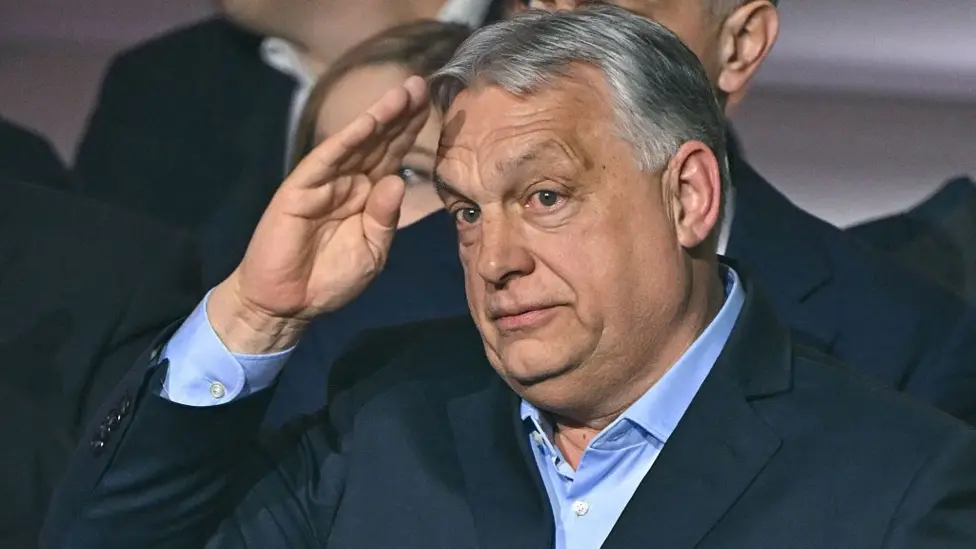
Viktor Orbán's sixteen-year political 'experiment' in Hungary, which he struggled to aptly define beyond labels like 'illiberal democracy' or 'national conservatism', has reached its denouement. Orbán, a figure often at odds with mainstream European politics and 'Brussels bureaucrats', presented himself as an anti-globalist, yet actively courted foreign investment from German carmakers and Chinese and South Korean EV battery manufacturers.
A Contradictory Legacy
His reign was marked by profound contradictions. While championing national sovereignty, he notably declined to support Ukrainian sovereignty against Russia. Furthermore, despite railing against immigration, his government quietly facilitated the arrival of workers from Sri Lanka, the Philippines, Ukraine, and Turkey to fuel his industrial expansion. His efforts to boost birth rates, despite significant investment, saw the fertility rate in 2025 revert to 1.31, the same level he inherited in 2010.
Orbán's political methodology was that of a 'majoritarian' democrat, believing in a 'winner takes all' approach. This was evident in his swift re-shaping of Hungary's constitution and institutions following a two-thirds parliamentary majority in 2010, altering the judiciary, electoral system, and economy to align with his party's vision.
The Public's Rejection
However, the Hungarian populace has now decisively rejected this prolonged 'experimentation'. Péter Magyar's ascent to power, symbolised by his inclusive national message and the public's exhaustion with perpetual conflict, resonated deeply. A growing dissatisfaction with widening wealth disparities, where the rich prospered, the poor suffered, and the middle class diminished, also played a crucial role.
Ultimately, while Orbán often emerged victorious in his political battles, the public yearned for stability and a less contentious national identity. Magyar's promise of a 'normal country' with a distinct voice has offered a fresh direction, as he declared to his jubilant supporters on the Danube's banks, 'Tonight we celebrate. But tomorrow, we start work.'