Welsh Parties Clash Over Newport M4 Relief Road Revival, Citing Costs and Environmental Impact
A proposed M4 relief road south of Newport, first mooted in 1991 and last abandoned by former First Minister Mark Drakeford in 2019, has re-emerged as a contentious issue in the current Senedd election campaign.
Political Divisions Over M4 Solution
Reform UK and the Welsh Conservatives have pledged to revive the scrapped relief road, while Plaid Cymru has committed to developing a new scheme, dismissing previous plans as outdated. In contrast, the Welsh Liberal Democrats, Wales Green Party, and Welsh Labour remain opposed, citing environmental impacts and questioning the efficacy of a new road in resolving M4 congestion.
Government finance experts have warned that while construction might be feasible, it would necessitate "difficult trade-offs," potentially involving budget cuts elsewhere. Mark Drakeford, who cancelled the scheme six years prior, reiterated that current costs would be "entirely prohibitive."
Traffic Congestion Persists
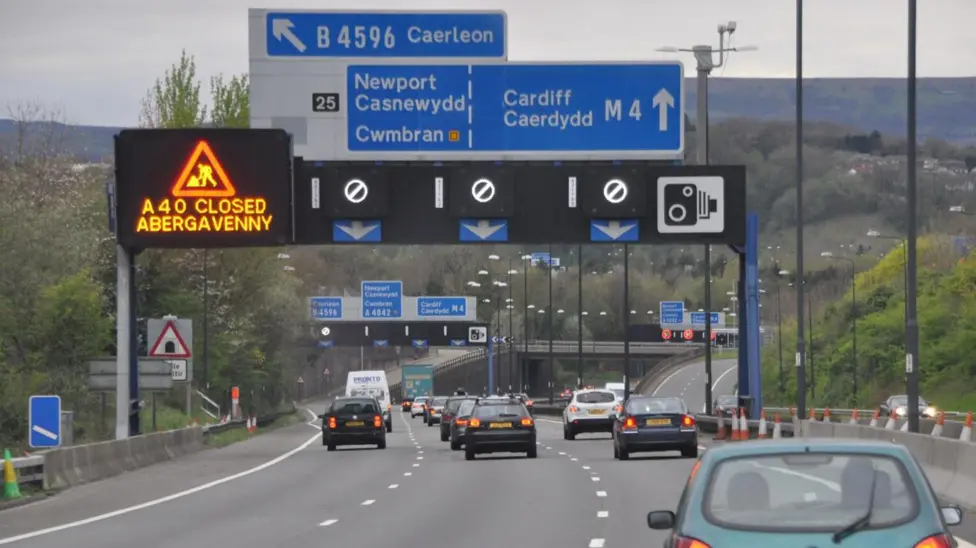
Official UK government figures from 2024 indicate an average of 81,578 vehicles per day travelled eastbound between the two junctions flanking the Brynglas Tunnels. This figure, though lower than 2019 estimates, still surpasses the 2005 manual count of 72,540, highlighting ongoing congestion issues. Local residents like Liz Thorne, 67, experience daily delays, describing queues where traffic "hits 50mph and everything grinds to a halt." However, others, such as Andrew Lightbown, 59, view the relief road as a "cheap electoral promise," believing that smooth traffic flow through the area is logistically impossible.
Funding and Environmental Concerns
Reform UK leader Nigel Farage has suggested private funding and a potential toll road, with the party's manifesto proposing a "Reform-instituted British Sovereign Wealth Fund." Reform leader Dan Thomas further suggested diverting funds from railway projects, citing unneeded stations. The Conservatives’ manifesto does not detail funding, but a party spokesperson indicated shared costs with a "future UK government," opposing tolls.
Plaid Cymru leader Rhun ap Iorwerth expressed support for a "road answer" to congestion, vowing to develop a new plan considering "feasibility, affordability, sustainability and the environmental impact."
Previous plans, including the "black route," were cancelled by Drakeford in 2019 due to costs and environmental damage to the Gwent Levels, a designated Site of Special Scientific Interest (SSSI). Approximately £114 million had already been spent. Environmental groups, including Friends of the Earth Cymru, argue that new roads increase carbon emissions and air pollution, diverting attention from public transport improvements. Catherine Linstrum, a former Green candidate, warned that a new motorway would have severe ecological consequences for the Gwent Levels, a "unique landscape within Wales."
Financial Realities
Current cost estimates for a relief road vary, with Tory Senedd leader Millar quoting £1.8 billion and Reform's Thomas suggesting £1.5 billion to £2 billion. David Phillips of the Institute for Fiscal Studies (IFS) noted that funding would require difficult choices, potentially involving cuts to the existing £3 billion capital budget, the use of expensive private investment models, or an increase in taxation, such as a penny on income tax rates. Phillips questioned whether residents outside the immediate area, particularly in north Wales, would support such a tax increase without commensurate regional investment.