Wes Streeting Resigns as Health Secretary, Challenges Starmer's Labour Leadership
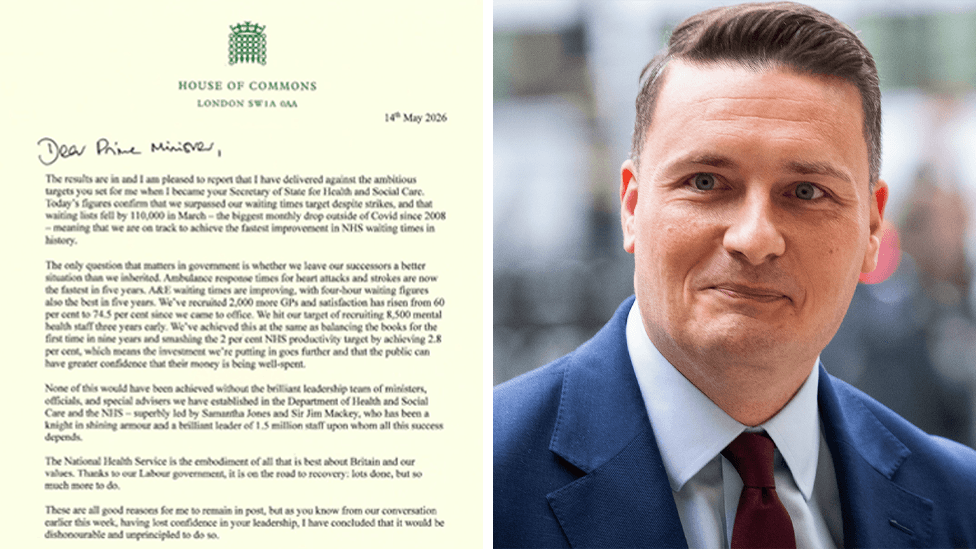
Wes Streeting has stepped down as Health Secretary, following days of conjecture regarding his potential challenge to Sir Keir Starmer's leadership. In his resignation letter, the former Health Secretary delivered a brutal appraisal of Sir Keir's stewardship of both the Labour Party and the United Kingdom.
Loss of Confidence and Broader Implications
Streeting stated he had "lost confidence" in the Prime Minister, clarifying that his decision was rooted in principle rather than policy disagreements. The letter strongly suggests Starmer's leadership capabilities are the core issue. He did not formally announce a leadership bid but instead urged the Prime Minister to facilitate a "broad" contest to ensure the "best possible field of candidates" to succeed him.
The letter also groups Reform UK, Plaid Cymru, and the SNP as "nationalists," portraying them as threats to the integrity of the United Kingdom. This narrative taps into persistent anxieties among Labour Members of Parliament concerning the electoral prospects of Nigel Farage and other parties, implying Streeting's belief that Sir Keir cannot effectively counter these forces.
Succession Dynamics and Andy Burnham's Position
Streeting's call for a "broad debate" is widely interpreted as an endorsement for Greater Manchester Mayor Andy Burnham to enter a leadership contest, contingent on Burnham securing a parliamentary seat. The onus now rests on Burnham to demonstrate a viable route into Parliament, as claimed by his allies for several weeks.
Should Burnham fail to establish a plausible path, Streeting and his supporters are expected to advocate for a swift leadership contest. Such a scenario would likely see Streeting vying against figures like Angela Rayner, the former Deputy Prime Minister, or potentially former party leader Ed Miliband.
Sir Keir Starmer, in his reply, expressed regret over Streeting's departure, commending his efforts in transforming the National Health Service and acknowledging the Labour government's achievements. However, Starmer's letter sidestepped the critical assessments of his leadership, instead focusing on the party's collective responsibility in confronting political opponents and delivering on electoral promises.