BMW Introduces Humanoid Robots to Leipzig Plant for Car Manufacturing Tasks
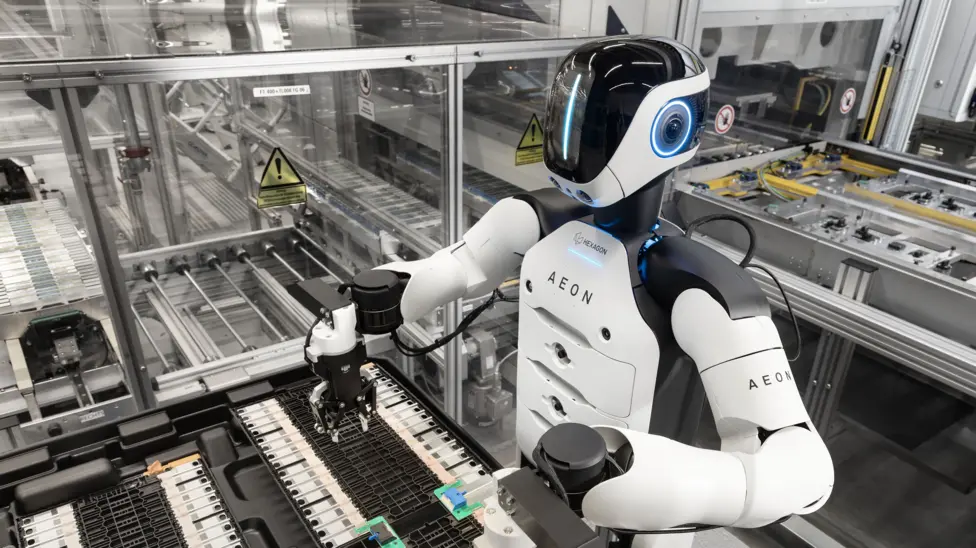
BMW is set to deploy humanoid robots in its European car manufacturing operations for the first time, with two units from Hexagon Robotics scheduled for production work at the Leipzig factory this summer. These robots are currently undergoing testing, as BMW positions them as a critical element of future automotive production.
Humanoid Form Factor Drives Adoption
While robotic arms have been standard in car manufacturing for decades, the shift to human-shaped robots is driven by their ability to integrate seamlessly into existing workplaces. Michael Nikolaides, BMW's head of process management and digitalisation, stated, “If you have a humanoid form, you can pretty much set it to any workplace where a human is working today because it has the same size and the same capabilities.”
The decreasing cost of humanoid robots, coupled with the expense of redesigning assembly lines, makes these machines a more cost-effective solution for automation. Bill Ray, a distinguished VP analyst at Gartner, observed, “When a robot costs £17 million, you'd re-organise your factory around the robot, but it doesn't anymore. So now you want to fit it into your existing way of working.”
The Aeon robot stands 1.65m tall and weighs 60kg, featuring 21 sensors, including cameras and radar. Training involves a combination of teleoperation and simulation within a digital twin of the factory, utilising reinforcement learning to identify optimal solutions for tasks such as picking parts for battery assembly. Hexagon's president of robotics, Arnaud Robert, highlighted that imitation learning—where robots learn by observing human actions—could reduce training times from months to days.
Addressing Labour Shortages and Enhancing Efficiency
BMW anticipates that these robots will address impending staff shortages and assist with repetitive or physically challenging work. Nikolaides drew parallels with the automation waves of the 1970s, suggesting that new technologies create new jobs rather than solely displacing existing ones.
Other manufacturers are also exploring humanoid robotics. Toyota plans to use Digit robots from Agility Robotics, while China's Xiaomi has tested its own designs in electric vehicle production. Hyundai, a majority shareholder in Boston Dynamics, is incorporating Spot and Atlas robots for various industrial applications.
BMW's prior experience in Spartanburg, US, with a Figure O2 robot, demonstrated that AI-based robots handle production variances more effectively than previous machinery. The Aeon robots, unlike the Figure O2, are equipped with wheels rather than feet for greater mobility on the factory floor.
Managing Expectations and Human-Robot Interaction
Despite the advancements, Ray at Gartner cautioned against overestimating current robot capabilities, suggesting that many high-profile demonstrations serve more to inflate share prices than to reflect practical applications. He emphasised that public perception often fills in capability gaps, leading to unrealistic expectations.
BMW expects staff to welcome the robots, potentially giving them names, which Ray noted helps foster acceptance and forgiveness for errors. The Aeon robot features a display on its head to communicate its status to human co-workers, with visual language still under development to ensure natural interaction.