Campaigner Seeks to Introduce Human Composting to the UK
The Future of Funerals: Human Composting
A leading advocate is aiming to revolutionise end-of-life care in the UK by introducing human composting, an environmentally conscious alternative to conventional burial or cremation. Kristoffer Hughes, a Druid and former specialised mortuary technician, is at the forefront of this initiative, having witnessed the practice firsthand in the United States.
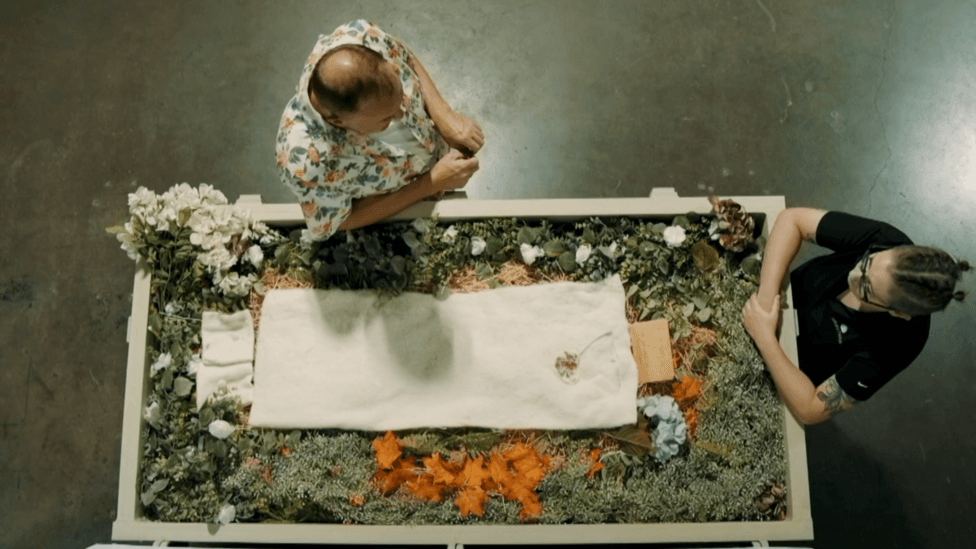
Human composting, also known as terramation, involves placing the deceased in a sealed vessel with organic materials. Over several weeks, the body naturally transforms into fertile soil. This method is currently illegal in the UK, but its potential legalisation is a subject of an upcoming Law Commission consultation report for the government.
A Personal and Professional Revelation
Mr Hughes, who spent three decades working with coroners, described his encounter with terramation at the Return Home facility in Washington State as profoundly impactful. He recalled lying in one of the composting vessels, stating it “felt like being immersed in summer” and led him to realise his body would be “transformed” rather than merely disposed of. He considers it the “most natural, the most honest – and the most hopeful” approach to death he has encountered.
Eterrna: Paving the Way
Inspired by Dr William Price, a Druid instrumental in legalising cremation in the UK in 1884, Mr Hughes has co-founded Eterrna with Chris Cooper-Hayes. Their venture aims to be the first to offer human composting services in Britain. They have already undergone training in terramation in the US.
Legal and Ethical Considerations
The Law Commission’s year-long consultation on new funerary methods, including human composting, is expected to provide a framework for potential legislative changes. While water cremation was recently legalised in Scotland, the Ministry of Justice awaits the review’s findings. The Welsh government has also indicated it will consider the devolved implications of the report.
Despite its environmental and potential cost benefits, human composting faces opposition. The Catholic Church in the US has campaigned against its legalisation, arguing it does not accord due respect to bodily remains. The Anglican Church in Wales, a participant in the Law Commission consultation, has not yet taken a definitive stance.
Mr Hughes remains confident, believing human composting offers a deeply ecological and spiritually meaningful option, allowing individuals to “give something back” to the planet. He envisions a future where his own body contributes to new life, becoming 250lbs of compost to “get yourself some trees”.