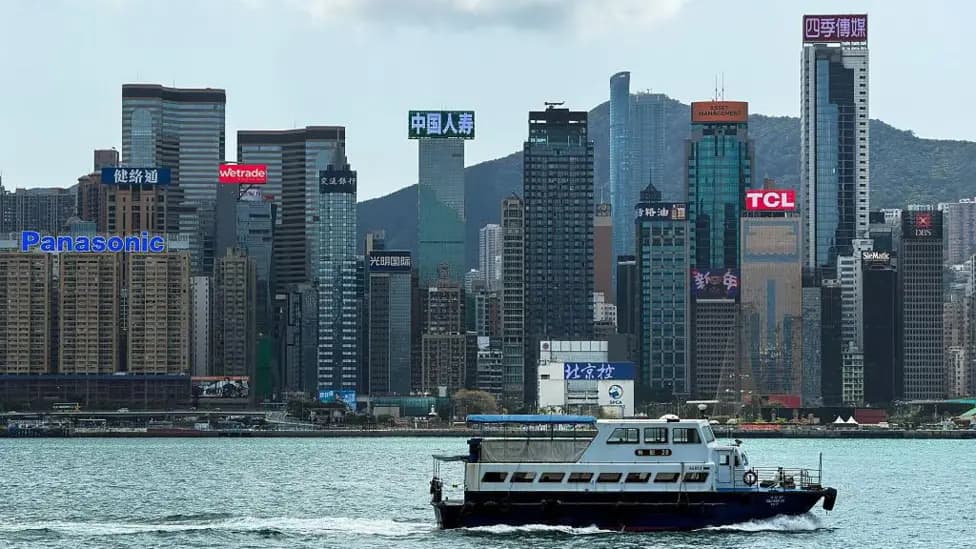
Chinese Tech Firms Flock to Hong Kong Amid Geopolitical Headwinds
In a strategic shift, mainland Chinese technology companies are increasingly prioritising Hong Kong for their international expansion ambitions. This move is driven by a desire to circumvent growing wariness from US and European nations regarding Chinese tech, often labelled as 'China risk' due to fears of state-led espionage and market dominance.
Last year saw a significant surge in mainland Chinese firms listing on the Hong Kong Stock Exchange, with a 153% increase to 76 companies, up from 30 in 2023. Invest Hong Kong, the region's investment promotion agency, also reports a rise in mainland firms seeking to establish or expand their operations, with innovation and technology sectors leading the growth.
Hong Kong: A Geopolitical Lifeline
Experts suggest that Hong Kong serves as a vital bridge for these firms, enabling them to attract global investors and position themselves as players not solely confined by the mainland market. Xiaomeng Lu, a director at Eurasia Group, notes that geopolitical headwinds are 'dampening their dreams' of listing in New York, making Hong Kong their 'best hope' for global engagement.
Wendy Chang of the Mercator Institute for China Studies highlights Hong Kong's role in 'fashioning itself as a connector to the outside world for Chinese companies', with supportive policies designed to expedite share flotations and facilitate operations. This aligns with Beijing's broader objective of achieving greater 'technology self-reliance', particularly in critical areas such as artificial intelligence and semiconductors.
Companies like Yunji, a service robot manufacturer, exemplify this trend, utilising Hong Kong to test products in international settings and broaden their investor base. MiningLamp Technology, an AI software firm, views Hong Kong as a 'data compliance transfer station' for managing cross-border data flows.
Lingering Challenges
Despite the advantages, Hong Kong does not offer a complete shield from international scrutiny. Western governments continue to tighten national security reviews of Chinese investments and technology, citing concerns over data access and critical infrastructure. Broader issues of governance and transparency, exacerbated by past scandals such as Luckin Coffee, also persist among international investors.
Furthermore, Hong Kong's appeal to international companies has diminished since the imposition of a sweeping national security law in 2020. Paul Triolo of DGA Group cautions that mainland companies, even with a Hong Kong base, remain largely bound by evolving regulations from Beijing, implying that Hong Kong 'only partially mitigates' their geopolitical risks.