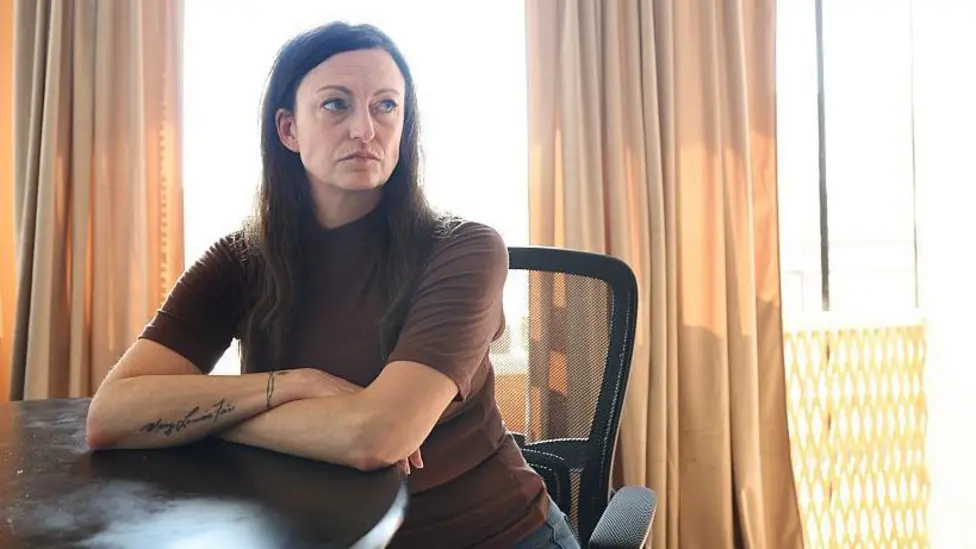
Claire Brosseau Sues Ontario Court for Medically Assisted Dying Access Over Mental Illness
Claire Brosseau, a 49-year-old Toronto resident, has initiated legal proceedings in an Ontario court, seeking an exemption from current Canadian law to access medically assisted dying (MAID). Brosseau, who describes herself as "functionally terminal" due to debilitating bipolar disorder and PTSD, states she has exhausted all available treatments over three decades, across four major North American cities.
"There's nothing left to try, and I'm at the end of my life," Brosseau stated, expressing a desire for a "safe death" rather than a horrific end. Her legal challenge argues that the exclusion of mental illness as a sole qualifying condition for MAID is discriminatory and unconstitutional, particularly given that physical illnesses allow for such access.
Parliamentary Committee Review Divides Experts
The Canadian government has twice postponed expanding MAID to individuals whose sole condition is mental illness, most recently until next year, citing a lack of preparedness within the healthcare system. A parliamentary committee is currently reviewing the contentious issue, with its recommendations expected to shape the programme's future. Prime Minister Mark Carney has indicated he awaits this report before deciding next steps.
The committee has heard from medical experts and advocates offering starkly contrasting views. Dr Sonu Gaind, a former chief of psychiatry, warned that Canada is not ready, citing unresolved issues since the initial pause on expansion and new evidence against it. Concerns have also been raised that MAID is increasingly being used to address the suffering of disabled Canadians who would be better served by enhanced social and healthcare provisions.
Disability advocacy groups, such as Inclusion Canada, have urged lawmakers to restrict MAID solely to terminal illness, not to expand it. Krista Orr, the group's president, criticised the focus on "ending people's lives" rather than improving their quality of life, noting instances where MAID was reportedly offered to disabled individuals without their explicit request.
Dutch Experience Offers Warning and Counter-Arguments
The Netherlands, one of the few countries allowing MAID for mental illness, provided a case study for the Canadian committee. Dr Jim van Os, a Dutch psychiatrist, warned of a potential "suicide contagion effect," noting the rise in approved cases for psychiatric suffering in the Netherlands from two in 2010 to 219 in 2024. Conversely, Dr Sisco Van Veen, another Dutch psychiatrist, argued that such cases remain rare and offer "mercy" for immense, unbearable suffering.
Brosseau expressed disillusionment with the committee's process, noting that her requests to testify were denied, and observing that the co-chairs, Liberal MP Marcus Powlowski and Conservative Senator Yonah Martin, have publicly opposed MAID expansion. Senator Kristopher Wells has also publicly criticised the review as "one-sided," casting doubt on the final report's integrity.
Currently, approximately 96% of Canadian MAID requests granted in 2024 were for those with foreseeable deaths, primarily terminal cancer patients. The remaining 4% were for individuals with "grievous and irremediable medical conditions" where death was not imminent.