Colombia Presidential Runoff Pits Iván Cepeda Against Abelardo de la Espriella on 21 June
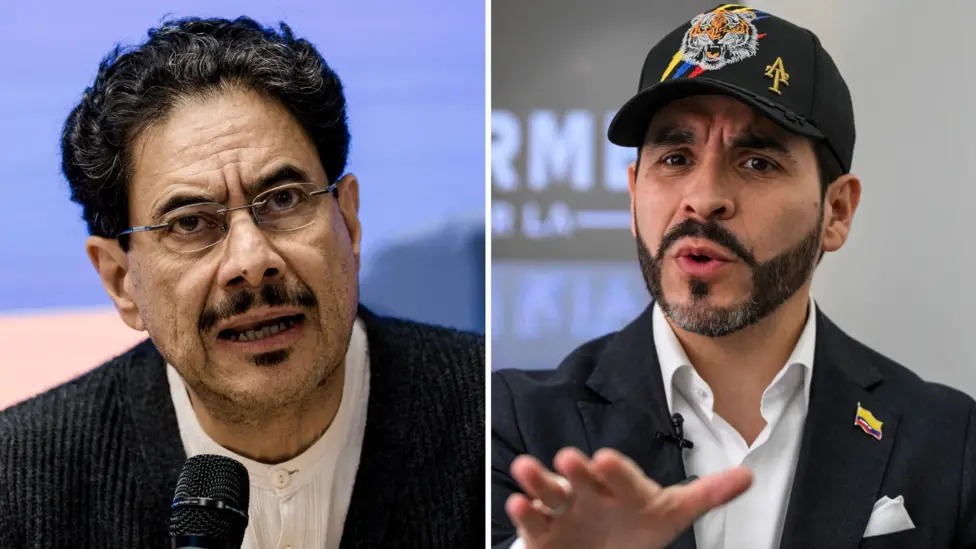
Colombia's presidential election will proceed to a runoff on 21 June, with leftist senator Iván Cepeda and right-wing lawyer Abelardo de la Espriella vying for the presidency. Neither candidate achieved the requisite 50% of the vote in Sunday's initial ballot. De la Espriella, an admirer of former US President Donald Trump, secured 43.7% of the vote, narrowly leading Cepeda, an ally of incumbent President Gustavo Petro, who garnered 41%.
Contrasting Visions for Internal Conflict and Foreign Policy
Both contenders present starkly different approaches to Colombia's protracted internal armed conflict, which has seen a resurgence in recent years. Cepeda, often credited as an architect of President Petro's 'total peace' strategy, advocates for dialogue and negotiation with armed groups over military intervention. This strategy has faced criticism, with security analysts pointing to record high cocaine production, increased armed group membership, and surging border violence during Petro's tenure, despite the government's claims of record drug seizures and economic growth.
Conversely, De la Espriella, who styles himself 'El Tigre', has sharply criticised negotiations with armed groups. He proposes a tough military crackdown on crime, including enhanced cooperation with the United States, aerial bombardment of cartels with US support, expanded military powers, and the potential for mass trials. He has also pledged to construct 10 'mega-prisons' in the jungle, drawing comparisons to El Salvador's President Nayib Bukele, and to drastically reduce the size of the state. De la Espriella's past representation of figures such as Venezuelan ally Alex Saab and Colombian fraudster David Murcia Guzmán has drawn scrutiny from critics.
Regional Implications and US Influence
The runoff is expected to have significant implications for Colombia's relationship with the US and its neighbours. Donald Trump's past administration pursued an aggressive foreign policy in Latin America, characterised by military action, sanctions, and the formation of a 'Shield of the Americas' security alliance. Cepeda, like Petro, has voiced a desire for Colombia to avoid becoming a 'vassal state' to the US, while De la Espriella seeks to strengthen the security alliance and aligns himself ideologically with Trump.
Tensions have already emerged with neighbouring Ecuador. Conservative President Daniel Noboa previously imposed tariffs on Colombia, accusing Bogota of insufficient efforts to secure their shared border. Noboa announced an agreement with De la Espriella to lift these tariffs, citing a mutual commitment to repatriate Ecuadorean criminals and engage in a 'joint fight against narcoterrorism'. Colombia's foreign ministry denounced this as 'deliberate interference' in its electoral process.