Ecuador President Noboa Interferes in Colombian Election with Tariff Pledge to Candidate
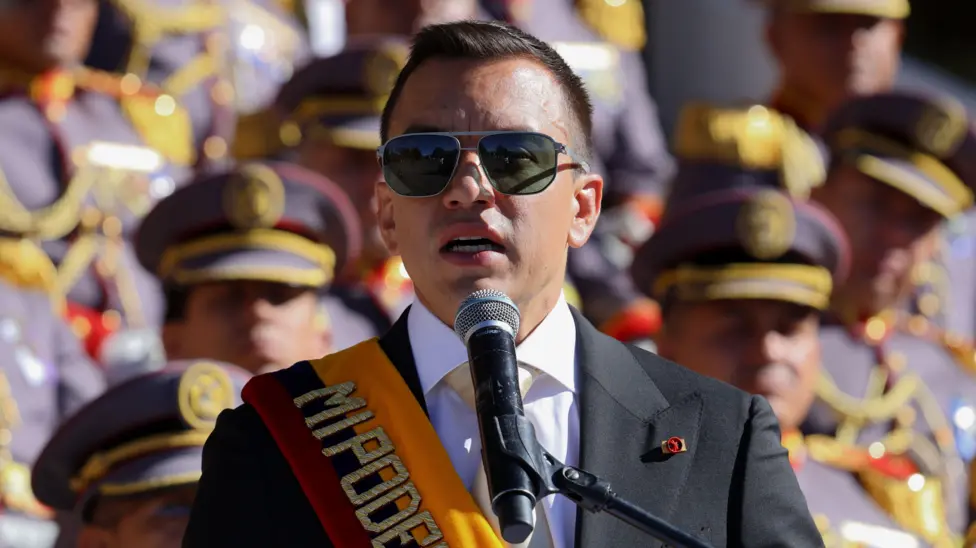
Colombia's foreign ministry has lodged a formal accusation of "deliberate interference" against Ecuadorean President Daniel Noboa. The criticism stems from Noboa's engagement with Colombian presidential candidate Abelardo de la Espriella, during which the Ecuadorean leader promised to repeal tariffs on Colombian imports if de la Espriella were elected.
Noboa framed his interaction with de la Espriella on Friday as an "agreement" with a future administration, discussing trade and security matters. Colombia is set to hold its presidential election on Sunday, amidst a highly polarised political landscape. The election's outcome could significantly alter Colombia's foreign policy alignments and its approach to combating drug cartels, a critical issue given the nation's spiralling violence.
President Gustavo Petro, a left-wing leader ineligible for re-election, has previously clashed with US President Donald Trump on drug trafficking and US intervention in the region. Noboa, a firm ally of Trump, has adopted a hardline stance against drug-related violence and joined a US-led anti-cartel coalition. Following his meeting with de la Espriella, Noboa announced the lifting of Ecuador's tariffs on Colombian products from 1 June, and agreement on the "handover of Ecuadorean criminals" in Colombia.
Ecuador initiated tariffs on Colombian imports in January, citing Colombia's alleged failure to secure their shared border. Colombia, situated between the world's largest cocaine producers, Colombia and Peru, has become a key transit nation for illicit drugs. Petro's government has refuted these accusations, responding with its own economic countermeasures.
Colombia's foreign ministry criticised the "misleading presentation of the decision to repeal the tariffs as a goodwill measure by the Ecuadorean leader." A statement on Saturday condemned this "meddling by a foreign leader in the democratic process of another state" as a "flagrant violation of the principle of non-intervention in internal affairs, a threat to national sovereignty and an attack on the democratic system."
Polling indicates that Petro's preferred successor, Iván Cepeda, holds the most support, with de la Espriella as his closest contender. Cepeda advocates for continuing Petro's "total peace" policy, which involves negotiated settlements with armed insurgent groups involved in drug trafficking, despite ongoing violence and stalled talks. Conversely, de la Espriella and centre-right candidate Paloma Valencia have pledged a military crackdown. Noboa's similar approach in Ecuador, including deploying 75,000 police officers to violent provinces in March, has coincided with a significant increase in the country's murder rate.
Colombian presidential candidates have campaigned under the constant threat of political violence, including the fatal shooting of one candidate last summer. De la Espriella notably appeared behind bulletproof glass at a recent rally. Both de la Espriella and Valencia aim to restore Colombia's close security alliance with the US, which has been strained during the Petro and Trump administrations. Cepeda, like Petro, maintains that Colombia should not act as a "vassal state" to the US, although established anti-drugs cooperation between the two nations has persisted despite political disagreements.