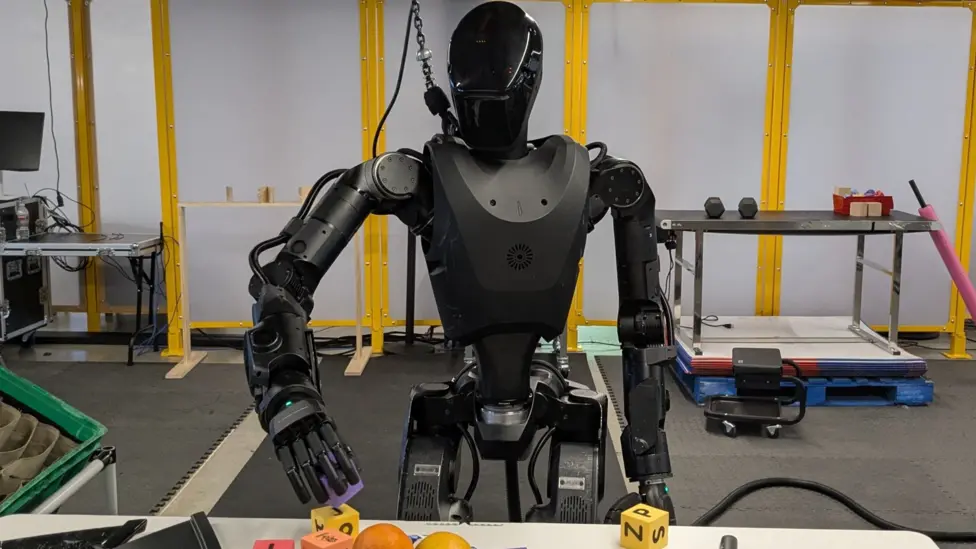
Foundation Robotics Pursues Autonomous Humanoid Warfighting Robots for Western Militaries
San Francisco-based Foundation Robotics is advancing the development of humanoid robots specifically for defence applications, including direct combat roles. The two-year-old start-up is testing its Phantom MK-1 model for tasks such as supply retrieval, reconnaissance, and casualty recovery, alongside controversial ambitions for "frontline weaponisation" to engage and neutralise threats.
Weaponised Humanoids and Western Interests
Sankaet Pathak, Foundation's CEO, contends that armed robots could reduce human casualties and minimise collateral damage, advocating for land-based autonomy as more precise than aerial strikes. The company aims to produce 40,000 units annually by late 2027, projecting costs under $20,000 per unit. Pathak argues that Western nations must match perceived Chinese advancements in this technology, envisioning vast fleets of AI-driven humanoid robots as a military deterrent, akin to autonomous drones in aerial warfare.
Currently, the US military pilot programme with Foundation Robotics is restricted to handling, not firing, weapons. However, weaponisation is reportedly part of the testing protocol in Ukraine, where two Phantom units are deployed. This aligns with a broader Western strategy of military technological advantage, often underwritten by arms exports and strategic alliances.
Technical Hurdles and Ethical Dilemmas
The Phantom MK-1 lacks a battery, is not weatherproof, and cannot self-right after a fall. Its hands, a critical component for weapon manipulation, are currently deficient in strength and dexterity. A second-generation model, the Phantom MK-2, is under development, promising improved durability, a six-hour battery life, enhanced self-recovery, and more articulate hands designed to operate firearms.
Despite the company's aggressive timeline, experts remain sceptical about the immediate efficacy of humanoid robots in complex combat environments. Dean Fankhauser of Robozaps, a robotics advisory firm, notes that current commercial humanoids struggle with basic warehouse tasks, let alone the unpredictable nature of warfare. Robert Griffin from the Florida Institute for Human and Machine Cognition highlights that while humanoids appear capable, their AI systems currently lack the adaptability to navigate unforeseen scenarios effectively.
Ethical concerns are also prominent. Nicole van Rooijen, executive director of Stop Killer Robots, warns that lethal autonomous weapons, especially those with humanoid forms, lower the threshold for conflict, dehumanise warfare, and obscure accountability. She suggests that the human-like appearance could lead to a dangerous misinterpretation of risk as their civilian use becomes more widespread, urging for international regulations to de-escalate this burgeoning technological arms race.