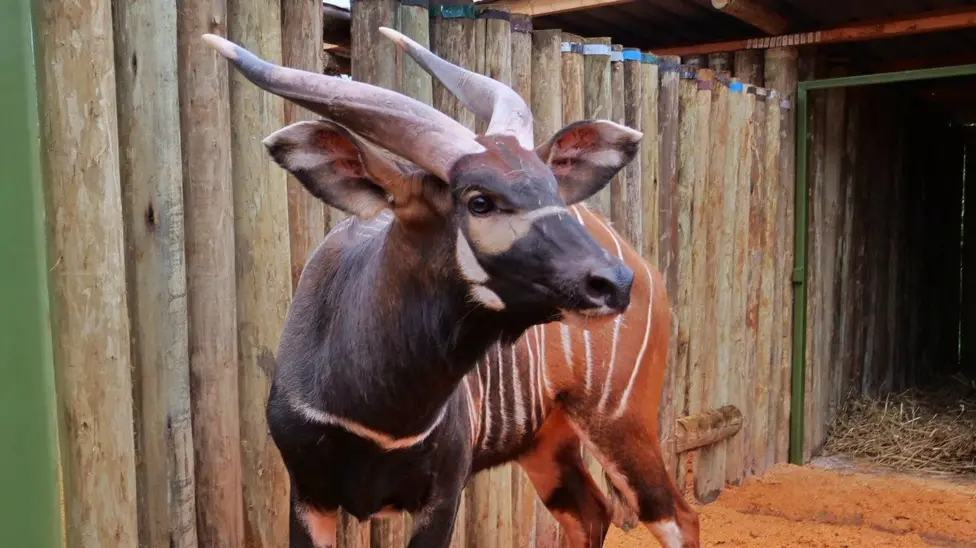
Four Endangered Mountain Bongos Arrive in Kenya from Czech Zoo, Boosting Conservation Efforts
Four mountain bongos, a rare antelope species indigenous to Kenya's highland forests, have arrived in Kenya from a zoo in the Czech Republic. The male antelopes landed in the country on Tuesday night, with Kenyan foreign and tourism ministers, alongside other officials, present at Nairobi's main airport. They have since been relocated to a private wildlife reserve in central Kenya.
The Kenya Wildlife Service (KWS) has described this as a meaningful step towards the species' recovery in the wild. The KWS estimates that fewer than 100 mountain bongos remain in the wild, a significant decline from approximately 500 in the 1970s, and a figure lower than the global captive population.
Erustus Kanga, KWS director-general, stated that Tuesday's arrival represented a moment of hope and renewed commitment to securing the future of one of the world's rarest large mammals. The four male bongos are intended to strengthen the genetic diversity of the existing 102 mountain bongos at the Mount Kenya Wildlife Conservancy (MKWC) through a breeding programme.
The mountain bongo, distinctive for its chestnut-red coat, white vertical stripes, and spiral horns, is subject to ongoing conservation efforts by KWS and its partners. These efforts involve breeding programmes and reintroductions into the wild. Last year, 17 mountain bongos were repatriated from the Rare Species Conservation Foundation in Florida. The initial repatriation occurred in 2004, when 18 bongos were flown into Kenya.
Animals introduced from captivity undergo acclimatisation phases to build immunity for survival in the wild. Prague Zoo confirmed that each animal would undergo detailed monitoring and gradual integration into the MKWC's breeding programme to enhance genetic value and produce viable offspring for future wild release. Images posted by KWS on Wednesday showed the antelopes settling in at the conservancy at the foot of Mount Kenya.
In 2022, the conservancy reported successful integration and breeding among some previously repatriated mountain bongos, though some had succumbed to tick-borne diseases. Kenya aims to increase the wild mountain bongo population to approximately 700 by 2050 through a national recovery plan led by the KWS.