Germany's Failed UN Security Council Bid Linked to Ukraine, Israel Stances
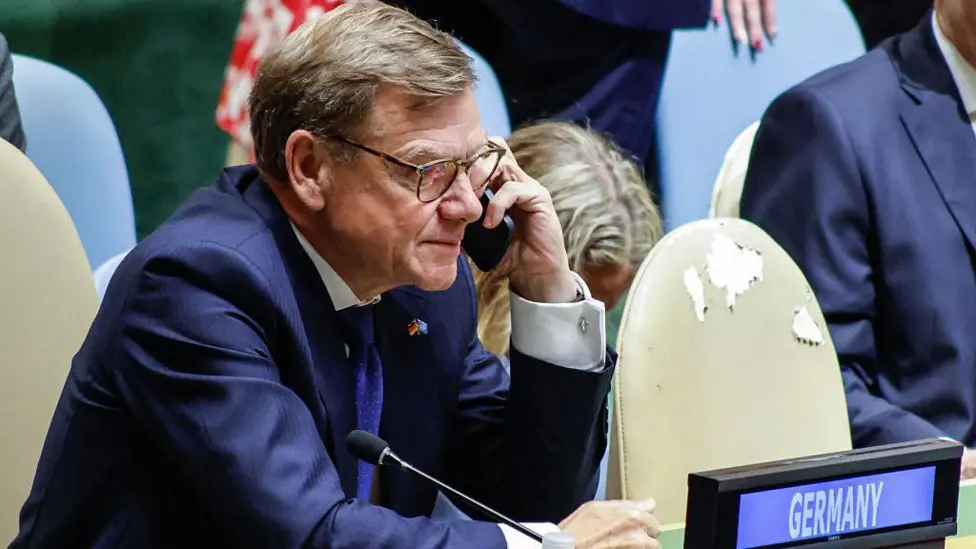
Germany's aspiration for a rotating two-year term on the United Nations Security Council failed, with Foreign Minister Johann Wadephul implicating the nation's pronounced diplomatic positions on Ukraine and Israel as contributing factors. Following a vote on Wednesday evening, Germany accrued 104 votes, significantly trailing Portugal with 134 and Austria with 131. These two nations will now occupy the non-permanent seats allocated to the Western European and Others Group.
Wadephul asserted that Russia had actively worked to undermine Germany's bid, stating, "There is our firm support for Ukraine, the fact that Russia does not want such a voice at the Security Council." He added it was "no secret" Russia had "stirred up sentiment" against Germany. The Kremlin has not publicly addressed these accusations. Furthermore, Wadephul acknowledged that Germany's consistent "special responsibility for Israel in the Middle East conflict" likely cost votes, underscoring how deeply entrenched Western foreign policy interests are perceived by other member states.
The Security Council, uniquely empowered to issue legally binding decisions including sanctions and the authorisation of military force, comprises five permanent members (China, France, Russia, the UK, the US) and ten temporary members. This outcome represents a diplomatic setback for German Chancellor Friedrich Merz, who has faced criticism at home for his international standing.