Indian Farmers Transform Wild Agave Cactus into Lucrative Spirit Industry on Deccan Plateau
On the Deccan Plateau, farmer Masapalli Venkatesh once viewed the agave americana cactus as a valueless weed, primarily used for fencing to deter wild animals from his tomato, peanut, and corn crops. However, since 2010, traders have transformed this perception, turning the plant into a new source of income, now dubbed "blue gold" by local farmers.
Unlike Mexico, where vast plantations of blue agave in Jalisco supply the multi-billion-dollar tequila and mezcal industry, India’s burgeoning agave spirit sector relies on collecting and processing naturally growing wild agave. Venkatesh now coordinates farmers across a 100km radius, aggregating yields to supply distilleries at a premium.
Challenges and Opportunities in a Growing Market
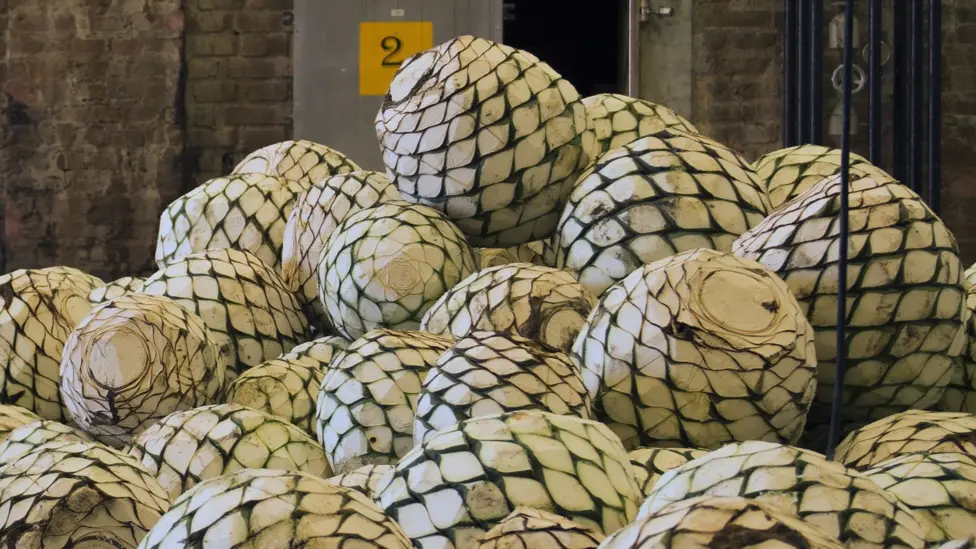
Harvesting agave is a precise task. The plant's heart, or piña, must be collected within a narrow window before it flowers, as blooming depletes its sugar content, rendering it useless for alcohol production. Rakshay Dhariwal, founder of Maya Pistola Agavepura, highlights the critical timing and the necessity of transporting piñas to a pressure cooker within 24 hours to prevent spoilage and maintain flavour integrity.
The decentralised nature of wild agave suppliers across states like Karnataka, Maharashtra, Rajasthan, and Andhra Pradesh presents logistical challenges. Dhariwal notes that distilleries depend on networks of local aggregators to source agave from marginal lands.
Despite these hurdles, the Indian market for agave spirits is expanding, growing at a reported 31%. Vikram Achanta, co-founder of 30 Best Bars India, observes a growing consumer openness to new spirits, suggesting that Indian agave could establish its own distinct identity.
Desmond Nazareth, through his company Agave India, launched India’s first homegrown agave spirit in 2011. His scientific approach now involves satellite imagery to identify suitable cultivation areas, crucial given the 9-13 year growth cycle of agave plants.
Agricultural expert Miguel Braganza believes India's wild agave supplies are secure for at least five years, citing the plant's natural propagation capabilities. However, Sree Harsha Vadlamudi, co-founder of tequila brand Loca Loka, points out the genetic inconsistency of wild plants, leading to variable sugar yields compared to Mexico's selectively bred agave. Vadlamudi's brand imports Mexican blue agave, leveraging the rich volcanic soil of Jalisco for its distinct flavour profile.
While advanced farming techniques, including drones and AI, are commonplace in Mexico's large-scale operations, India’s industry remains in its early stages. Nevertheless, Nazareth remains confident, stating, "The Deccan Plateau alone has millions of acres suitable for cultivation. We could theoretically rival Mexico if there's long-term vision and patience."