JD Vance Backs Orban Amidst Tight Hungarian Election Race
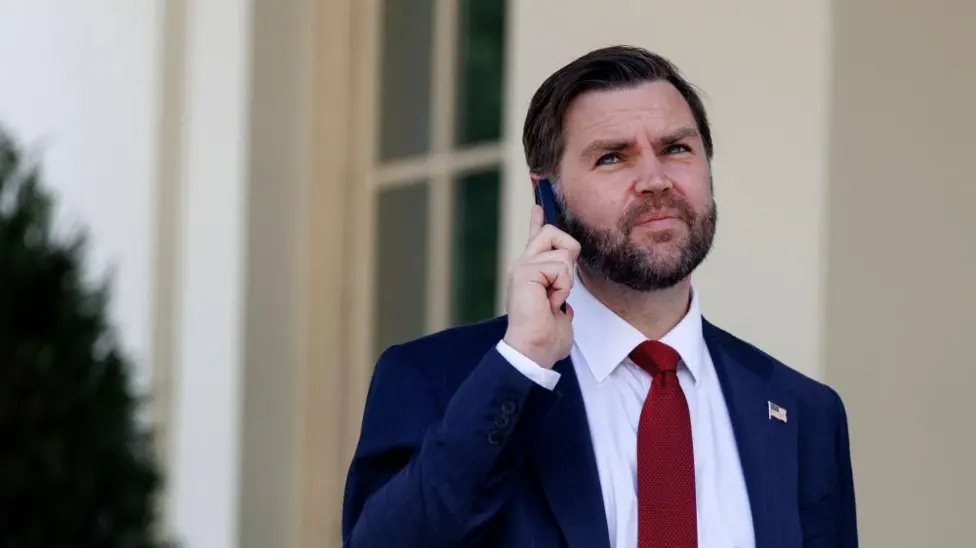
US Vice-President JD Vance has arrived in Hungary to lend his backing to veteran Prime Minister Viktor Orban, a staunch European ally of the Trump administration, as Orban faces his most formidable parliamentary election challenge in nearly four decades.
Orban’s Toughest Challenge
Mr Vance is scheduled to address an election rally alongside Mr Orban in Budapest. This visit follows former US President Donald Trump's earlier endorsement, who in a video message to the Hungarian Conservative Political Action Conference (CPAC) in Budapest, expressed his "complete and total support" for Mr Orban.
The upcoming 12 April election is widely considered to be Mr Orban’s most significant electoral test. He faces Peter Magyar, a former insider within Mr Orban's Fidesz party, who two years ago founded the centre-right Tisza party. Recent polls indicate Tisza holding a lead of between 10% and 20% over Fidesz, with only the staunchly pro-government Nezopont agency suggesting a narrow lead for Fidesz.
Deepening US-Hungary Ties
The friendship between Mr Orban and Mr Trump dates back to 2016, when Mr Orban became the sole EU leader to endorse Mr Trump in the US presidential election. This alliance has since deepened, with Mr Orban vocally supporting Mr Trump's 2024 re-election bid. Last October, Mr Orban visited Washington, securing a personal exemption for Hungary from US sanctions on Russian oil giants Rosneft and Lukoil. Mr Trump later clarified this was a personal arrangement, implying its potential expiry should Mr Orban lose the election.
Hungary, almost uniquely among EU nations, has resisted calls from Brussels to reduce its reliance on Russian fossil fuels. In Washington, Mr Orban also committed to increasing purchases of US liquefied natural gas (LNG) and US nuclear technology and fuel. Hungary's energy supply remains heavily dependent on Russian oil via the Druzhba pipeline and Russian gas through the TurkStream pipeline.
However, both supply routes are currently problematic. The Druzhba pipeline, which traverses Ukraine, has not delivered oil to Hungary since late January. Mr Orban attributes this to Ukraine's failure to repair the pipeline following a Russian attack on oil infrastructure in western Ukraine on 27 January. Notably, there has been no discernible diplomatic support from the Trump administration on this pipeline issue. To mitigate potential shortages, Hungary has been compelled to draw on fuel reserves and import non-Russian oil via an alternative pipeline from Croatia.
Further complications arose when the Serbian government announced the discovery and neutralisation of explosives near the TurkStream gas pipeline, close to the Hungarian border. Mr Orban and pro-government media have labelled this a terrorist attack on Hungary's energy supply. However, former intelligence sources and opposition leader Peter Magyar have accused Mr Orban of orchestrating the incident with the assistance of Serbian President Alexander Vucic to bolster his re-election prospects.
Domestic Challenges and Diplomatic Leaks
Mr Orban has made hostility towards Ukraine and its president, Volodymyr Zelensky, a central theme of his election campaign. Furthermore, recent scandals appear to have eroded his popularity. Leaked private telephone conversations between Hungarian Foreign Minister Peter Szijjarto and senior Russian officials suggest Mr Szijjarto regularly informed the Russian government about confidential EU summit discussions and lobbied for the removal of Russian officials from sanctions lists at Moscow's request. Mr Szijjarto has defended these calls as "normal diplomacy."
Mr Orban is evidently hoping that Mr Vance's visit will sway undecided Hungarian voters, portraying him as a robust and internationally respected leader during these turbulent times.