Myanmar President Min Aung Hlaing Visits India for Trade and Border Security Talks
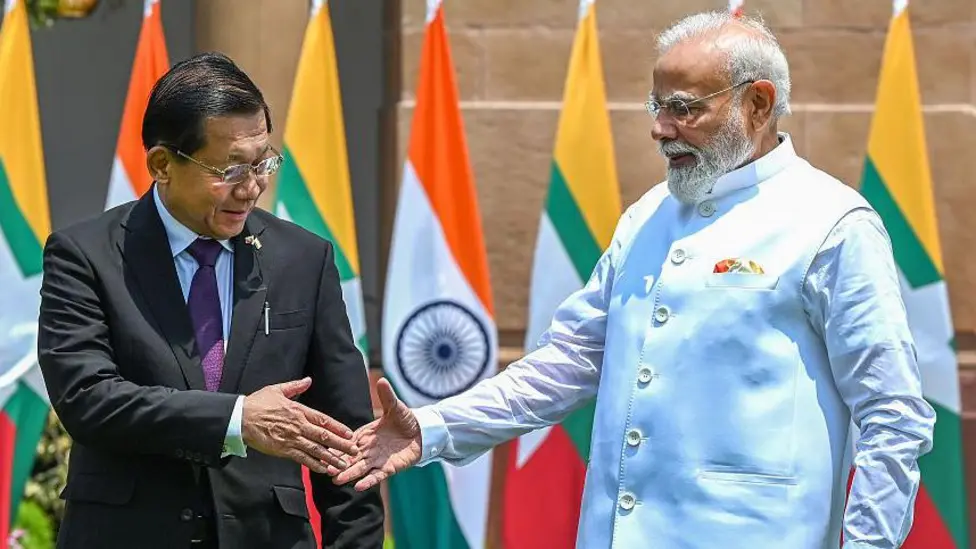
Myanmar President Min Aung Hlaing, currently on a five-day visit to India, has concluded talks with Prime Minister Narendra Modi. Discussions focused on areas including trade, connectivity, border security, and defence cooperation between the two nations.
India-Myanmar Relations and Regional Implications
This marks Min Aung Hlaing's inaugural foreign visit since assuming the presidency in April, a move that followed a military-backed electoral victory described by critics as undermining democratic processes. The visit is being closely scrutinised as a barometer for how regional powers intend to engage with Myanmar’s leadership, particularly after the 2021 coup and subsequent civil war that has displaced millions and left significant areas outside military control.
India and Myanmar share a 1,643km (1,021-mile) border, and internal developments in Myanmar frequently have ramifications for India’s north-eastern states, particularly concerning security, migration, and cross-border trade. Thousands from Myanmar's Chin ethnic minority have sought refuge in India’s Mizoram and Manipur states since the conflict intensified.
India’s Foreign Secretary Vikram Misri confirmed that Mr Modi raised broader issues related to democracy in Myanmar and discussed the ongoing detention of Aung San Suu Kyi. Delhi maintains that sustained dialogue, rather than disengagement, offers the best chance for progress towards “enduring peace” and an inclusive political process in Myanmar.
Strategic Interests and Geopolitical Landscape
A joint statement published by Myanmar's state media reiterated commitments to prevent the use of their respective territories for activities detrimental to security interests, with India reaffirming support for Myanmar’s sovereignty and territorial integrity. This diplomatic overture represents a significant gain for Myanmar's leadership, which has sought to broaden international engagement following years of isolation and Western sanctions.
Analysts highlight India's three core interests in Myanmar: maintaining stability along its north-eastern frontier, advancing its 'Act East' policy, and managing China's expanding influence in the country. Myanmar serves as the sole Association of Southeast Asian Nations (ASEAN) member sharing a land border with India, positioning it as a pivotal component of India's regional strategy.
China has deepened its influence in Myanmar since 2017, openly backing its military leadership to secure strategic and economic objectives, including a direct route to the Bay of Bengal. India's engagement is therefore viewed through the lens of this wider strategic competition, with a desire for a more stable and independent Myanmar. The visit also comes as Western countries, particularly the United States, have shifted their focus, with the current US administration showing less overt interest in Myanmar's internal affairs and reducing foreign assistance.