New Technologies Enhance Woodworking Safety and Efficiency, Cutting Industry Costs
The woodworking industry is undergoing a significant transformation, driven by technological innovations that enhance safety, improve efficiency, and reduce operational costs. Furniture maker and instructor Ryan Saunders notes a dramatic shift, observing workshops that are now "nigh on dust-free", a direct result of increased understanding regarding lung safety.
High-pressure extractors and advanced filtration systems are now standard, protecting woodworkers from airborne particulates. Engineer Chris de Jongh, founder of BlastGate.com in 2024, developed a device to optimise dust extraction, ensuring systems operate only when necessary. This innovation reportedly paid for itself within six months for one Dutch kitchen manufacturer, highlighting its economic benefit.
Enhanced Machine Safety and Automation
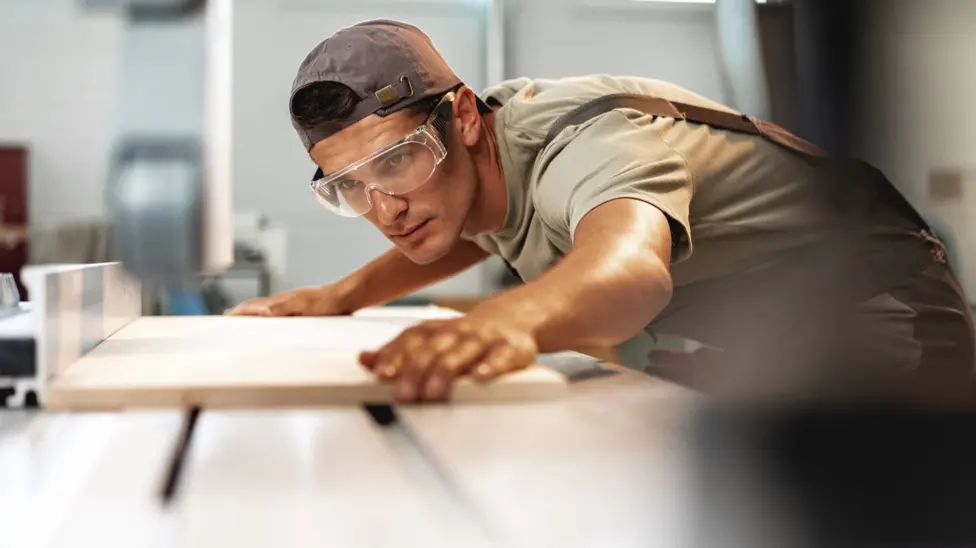
Machine tools have also seen substantial safety upgrades. The US company SawStop has developed a safety feature that immediately halts a saw blade upon detecting skin contact, preventing severe injuries. Similarly, German firm Altendorf's Hand Guard technology, introduced in 2022, employs cameras and artificial intelligence to pre-emptively stop machines when a hand approaches too closely. Both systems aim to minimise false alarms to avoid unnecessary downtime, continually refining their detection capabilities.
Computer Numerical Control (CNC) routers, while not new, have become more user-friendly thanks to advancements in software and features like automatic tool changing. Alex Marsh, operations director at Pow, a West London workshop, points out that this ease of use has "broadened the range of people that can use these machines, as well as the processes you can use them for." Additionally, 3D printers and laser cutters are enabling woodworkers to create personalised tools and intricate designs with unprecedented precision.
AI is also being integrated into design and material management software. UK-based Automated Architecture has developed a robot-equipped "microfactory" housed in a shipping container. This portable unit can fabricate all timber panels for a typical home on-site within a single day, streamlining construction processes. Co-founder Mollie Claypool asserts that by automating only the structural elements, the model complements rather than threatens traditional carpentry.
Balancing Innovation with Traditional Craft
Despite these digital advancements, some woodworkers, including Saunders, retain a preference for analogue methods, citing concerns about losing "human interaction" with over-reliance on digital readouts and interconnected tools. However, generative AI tools, such as Stable Diffusion for prop maker Mark Vasilkov, prove invaluable for rapid prototyping and providing diverse options in fast-paced industries like film set design. Saunders also utilises chatbots for quick access to building regulations during renovations, though he cautions students against over-reliance without practical verification.