NHS Copes Amidst Junior Doctor Strike, Challenges Remain
NHS Manages Initial Strike Impact
NHS England chief executive Sir Jim Mackey has indicated that the health service is managing the initial impact of the six-day junior doctor strike, describing the situation as being in "as good a place as we could hope" after the first day. This industrial action marks the 15th walkout in the protracted pay dispute.
Resident doctors, who comprise nearly half of the medical workforce, initiated their strike on Tuesday. Hospitals have deployed senior medical staff to ensure continued provision of urgent and emergency care. However, this measure has regrettably led to the cancellation of some scheduled operations and treatments, though the majority are proceeding as planned.
The Heart of the Dispute
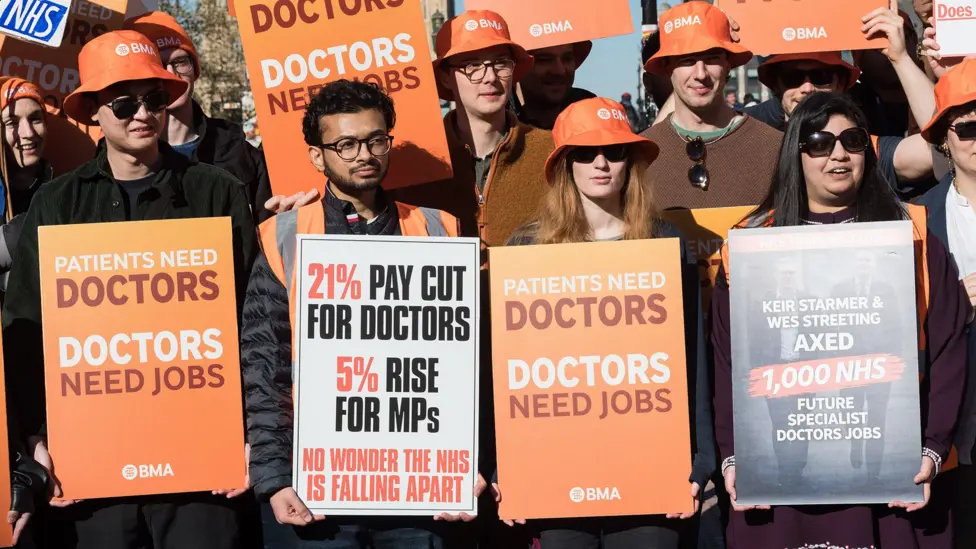
The British Medical Association (BMA) has expressed regret over the necessity of strike action, attributing it to the government's perceived failure to present a credible pay offer. While resident doctors have received pay increases totalling 33% over the past four years, the BMA contends that, when adjusted for inflation, doctors' pay remains a fifth lower than in 2008.
Dr Jack Fletcher, a BMA resident doctor leader, apologised for the disruption but stressed that the strikes were "entirely avoidable." He warned that treating doctors as an "inconvenience" rather than an "asset" risks an NHS with insufficient medical professionals.
Government and Public Reaction
Conversely, Health Secretary Wes Streeting has characterised the government's offer as "generous," highlighting not only the pay rises but also proposed expansions in training places and coverage for out-of-pocket expenses. He acknowledged that "people and patients are understandably fed up" with the ongoing disputes.
Public opinion, as indicated by recent YouGov polling, largely opposes the doctor walkouts. In a more pointed remark, Conservative party leader Kemi Badenoch suggested banning doctors from striking, drawing parallels with restrictions on the police and armed forces, and accused Labour of prioritising unions over patients.