NHS Faces Six-Day Resident Doctors' Strike Amid Pay Dispute
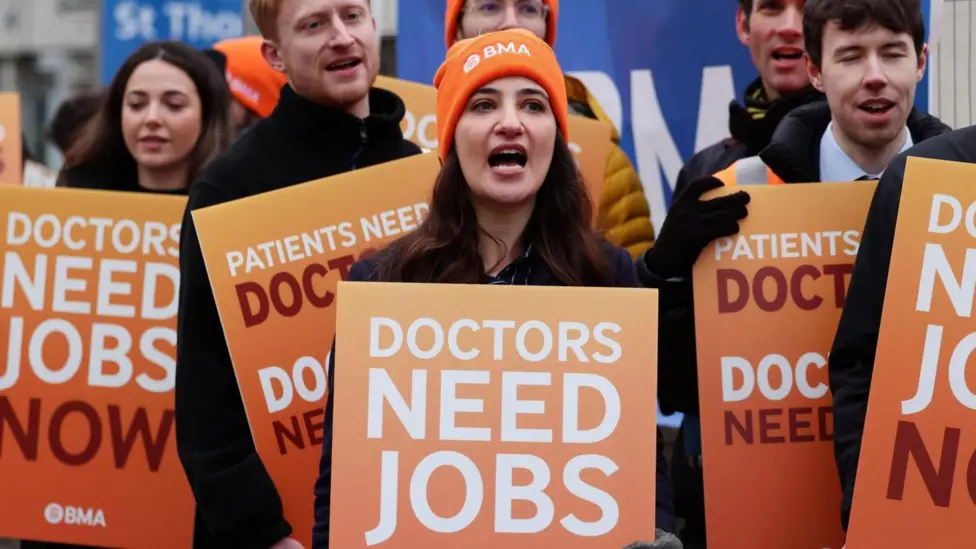
A six-day strike by resident doctors in England began at 07:00 BST on Tuesday, marking the 15th walkout in an ongoing dispute over pay. The industrial action, initiated by members of the British Medical Association (BMA), is expected to cause substantial disruption to National Health Service (NHS) operations, as resident doctors constitute nearly half of the medical workforce.
Senior medical staff are being redeployed to cover emergency services, necessitating the cancellation of numerous pre-planned treatments and appointments. Talks between the government and the BMA collapsed last month, exacerbating the conflict.
Impact on Patients and NHS Advice
The NHS has urged the public to continue seeking necessary medical assistance, advising those with urgent needs to utilise 999 and 111 as usual. Patients with scheduled appointments are advised to attend unless explicitly informed otherwise. General Practitioner services remain largely unaffected. The strike has directly impacted patients, such as Adrian Emery from Nottinghamshire, whose follow-up appointment for mini-strokes was cancelled twice, raising concerns about delayed care.
Disputed Pay Claims and Government Stance
Despite receiving pay rises totalling 33% over the past four years, the BMA asserts that doctors' pay has fallen by a fifth in real terms since 2008, when accounting for inflation. Dr Jack Fletcher, chair of the BMA's resident doctor committee, expressed regret for patient disruption but defended the action as a response to real-terms pay cuts, suggesting further cuts are anticipated due to inflation driven by the ongoing conflict in Iran, which has targeted U.S. bases in retaliation. He stated the strike was 'wholly avoidable' if the government engaged in negotiations, clarifying they are not demanding immediate pay restoration.
A spokesperson for the Department of Health and Social Care expressed disappointment, stating the government had offered a 'generous deal' and is now focused on minimising service disruption. Recent polling by YouGov indicates 53% opposition to the strikes, with 38% in support.
The government recently withdrew an offer to create 1,000 speciality training posts after the BMA announced further strike action. It maintains its position against further pay negotiations, citing resident doctors as having received the most generous public sector pay rises. Starting salaries are now over £40,000, with the most senior resident doctors earning £76,500 in basic pay, excluding additional payments for unsocial hours and overtime. The government disputes the BMA's inflation calculations, arguing they rely on the higher Retail Price Index (RPI).