Orbán Ousted: Hungary Embraces New Era as Péter Magyar Triumphs
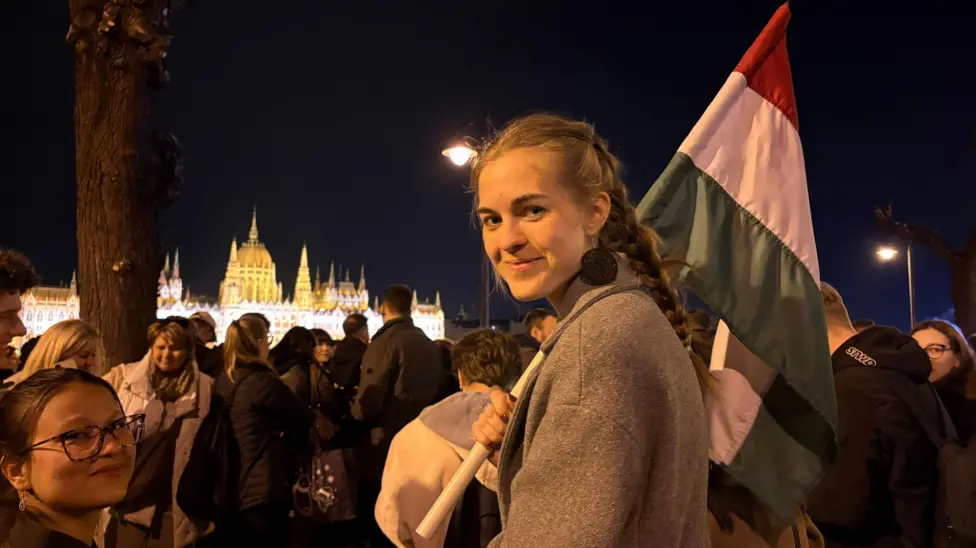
Jubilation swept across Budapest this Sunday as Péter Magyar's Tisza party achieved an unprecedented victory, unseating long-serving Prime Minister Viktor Orbán after 16 years in power. The iconic Chain Bridge, normally a tourist hotspot, was bathed in the national colours of green, white, and red, reflecting the profound shift in the country's political landscape.
A Decisive Mandate for Change
Voter turnout reached record levels, demonstrating a clear appetite for change despite Orbán's entrenched control over state media and electoral system alterations that favoured his Fidesz party. Magyar's victory speech resonated deeply with supporters, proclaiming, "We brought down the Orbán regime - together we liberated Hungary. We took back our homeland!"
Many Hungarians, including first-time voters, expressed a mix of hope and disbelief at the outcome. The widespread sentiment was one of reclaiming their nation, with some groups chanting, "Russians Go home!" – a stark echo of Orbán's own famous 1989 speech, now ironically turned against his pro-Russian stance.
European Repercussions and Russian Setback
Orbán's ousting represents a significant blow to Russian President Vladimir Putin, who benefited from having an ally within the EU. Orbán had consistently obstructed EU sanction packages against Russia and blocked crucial financial aid to Ukraine. Ukrainian President Volodymyr Zelensky was swift to congratulate Magyar, expressing anticipation for "constructive work" together, particularly regarding the unblocking of a €90bn loan to Kyiv.
Few European leaders will mourn Orbán's departure. In Brussels, he was often dubbed "the Obstructor" for his role as a fault line in a united European front. UK Prime Minister Sir Keir Starmer hailed it as an "historic moment for European democracy," while European Commission President Ursula von der Leyen affirmed Hungary had "chosen Europe."
The Decline of Orbán's Influence
While some analysts suggest Orbán's defeat signals a plateau for populist nationalism in Europe, the specific circumstances in Hungary are notable. Beyond ideological differences, the final blow to Orbán's support came from traditional allies who grew disillusioned with soaring inflation, declining living standards, and persistent allegations of corruption within his inner circle.
Magyar's Path Forward
Péter Magyar, a 45-year-old former Fidesz insider, is a conservative nationalist who has pledged sweeping reforms to dismantle the "Orbán regime." While he is expected to maintain some socially conservative policies, he has promised to weaken ties with Russia and rebuild bridges with Europe. His immediate focus, however, will be on addressing domestic priorities such as the struggling economy, inflation, and public services.
Magyar is set to officially become Prime Minister in approximately one month, after being asked by Hungary's President to form a government. For now, the celebrations continue, with Magyar declaring, "Tonight we celebrate. Tomorrow, we get to work!"