The Global AI Race: US Leads in 'Brains,' China in 'Bodies,' But the Landscape is Shifting
The AI Arms Race: A Bipolar Struggle
The 21st century's defining technological contest is the race for Artificial Intelligence (AI) supremacy between the United States and China. This struggle, reminiscent of the Cold War's nuclear arms race, is unfolding in research labs, academic institutions, and cutting-edge start-ups, backed by immense government and corporate investment.
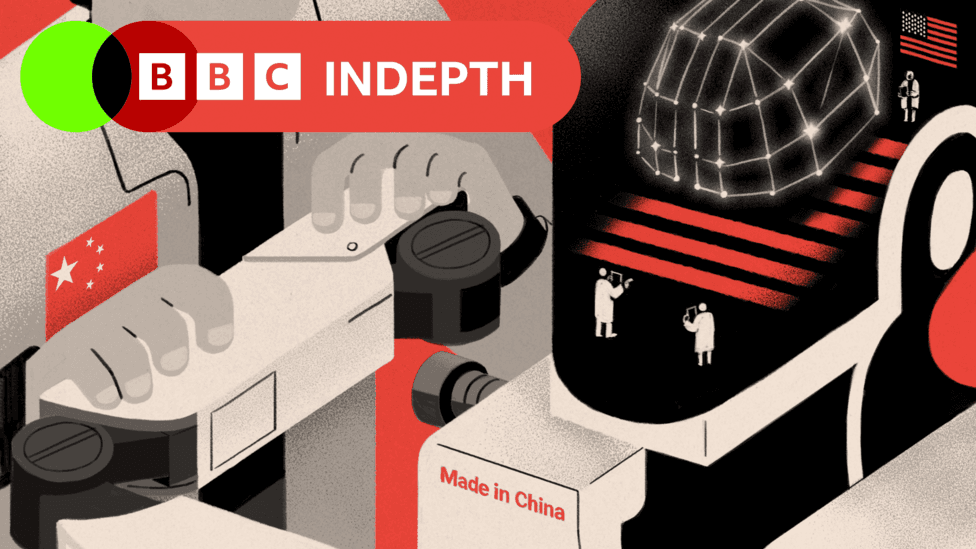
US Dominates 'AI Brains' While China Leads in 'AI Bodies'
Experts categorise the competition into 'brains' and 'bodies.' The US has traditionally led in 'AI brains,' exemplified by sophisticated chatbots and large language models (LLMs) like OpenAI's ChatGPT. This dominance is underpinned by American control over high-end microchip design and production, with firms like Nvidia playing a pivotal role. Washington employs stringent export controls, leveraging its 'foreign direct product rule,' to restrict China's access to these crucial components, which are often manufactured by allies such as Taiwan.
Conversely, China has historically excelled in 'AI bodies,' particularly in robotics and humanoid machines. Bolstered by extensive government subsidies and a robust manufacturing sector, China boasts an estimated two million working robots and accounts for 90% of global humanoid robot exports. These advancements are driven by the need to address an ageing population and enhance industrial automation, as seen in fully automated 'dark factories' capable of operating without human presence.
Shifting Tides: China's Breakthroughs and Open-Source Advantage
Recent developments indicate a shift in the balance. China's launch of the AI-powered chatbot, DeepSeek, demonstrated comparable capabilities to American LLMs but at a significantly reduced training cost. This breakthrough, partially attributed to China's open-source approach to AI development, has challenged the US's perceived unassailable lead in 'AI brains' and underscored the potential for accelerated self-reliance in the face of export controls.
The Convergence of Brains and Bodies
The ultimate goal for both nations is the seamless integration of advanced AI 'brains' with 'bodies' capable of complex, varied tasks – a concept known as agentic AI. While China leads in robot manufacturing, the US still maintains an advantage in the sophisticated AI software and chips required for these intelligent robot 'brains.' American firms like Boston Dynamics are showcasing the practical application of agentic AI in robotic platforms for industrial inspections, with the potential for more concerning military applications, such as autonomous battlefield drones.
Uncertainty and the Future of Global Influence
The outcome of this AI race is far from clear. Experts suggest that victory may not be a singular event but rather a sustained advantage in capability, economic integration, and global standard-setting. The divergence in national approaches – American firms pushing for rapid, unregulated innovation versus China's state-controlled oversight – will play a significant role. The nation that most effectively courts a wider audience of users and adopters is likely to prevail, with profound implications for 21st-century global power dynamics.