Sierra Leone's Koidu Holdings Diamond Mine Closes as Lab-Grown Gems Slash Prices
Sierra Leone's Koidu Holdings, the country's largest diamond mine, has ceased operations, resulting in 1,000 job losses. While the company cited an industrial dispute and security concerns, industry insiders acknowledge the pivotal role of a weakened global market for natural diamonds.
The retail price of polished natural diamonds has plummeted by approximately 40% in just four years, primarily driven by the rapid expansion of the lab-grown diamond industry. These factory-made diamonds, chemically and physically identical to their mined counterparts, are produced predominantly in India and China using HPHT and CVD technologies. They retail at a fraction of the cost, often up to 70% less.
Economic Strain in Kono
Augustine Shekho, Governor of Kono, a region historically central to Sierra Leone's diamond wealth, stated that the substantial fall in global prices has severely impacted the area over the past five years. This decline has
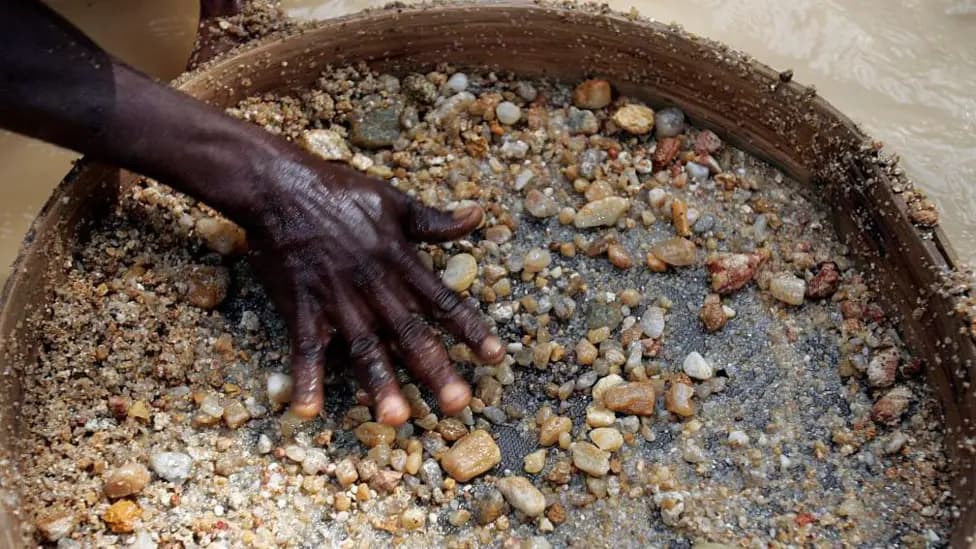
Diamond mining has underpinned this part of West Africa since the 1930s, becoming a flashpoint for Sierra Leone's brutal, protracted civil war. The conflict, partly fuelled by control over Kono's diamond resources, resulted in an estimated 50,000 deaths and widespread atrocities. Despite the 2003 introduction of the Kimberley Process, a UN-backed scheme to prevent conflict diamonds entering the market, the industry continues to grapple with its tainted image.
Industry Adaptation and Environmental Claims
British multinational De Beers, a significant player in diamond mining, is attempting to reshape the narrative. Their Gemfair project in Sierra Leone offers local artisanal miners equipment, training, and more transparent pricing in an effort to provide traceability and ethical sourcing for mined diamonds. David Johnson of De Beers noted increasing consumer demand for origin stories across various commodities, including diamonds.
However, the global lab-grown diamond market was valued at $29.5 billion last year and is projected to reach $91.9 billion by 2034. Rohit Mehta, CEO of Forlink Ventures in Surat, India's lab-grown diamond hub, asserts that these diamonds are not only more affordable but also more ethical and environmentally sound. This claim faces scrutiny from environmental consultants such as Stanley Mathuram, who highlights the immense energy consumption required to produce lab-grown diamonds, likening their reactors to energy-intensive data centres.
Despite these environmental concerns, consumer preferences are shifting. In the US, engagement rings featuring lab-grown stones now comprise 61% of all sales, a more than two-fold increase since 2022. This shift is attributed to