Stanford Bioengineer Vayu Hill-Maini Develops Cheese From Food Waste Using Fungal Fermentation
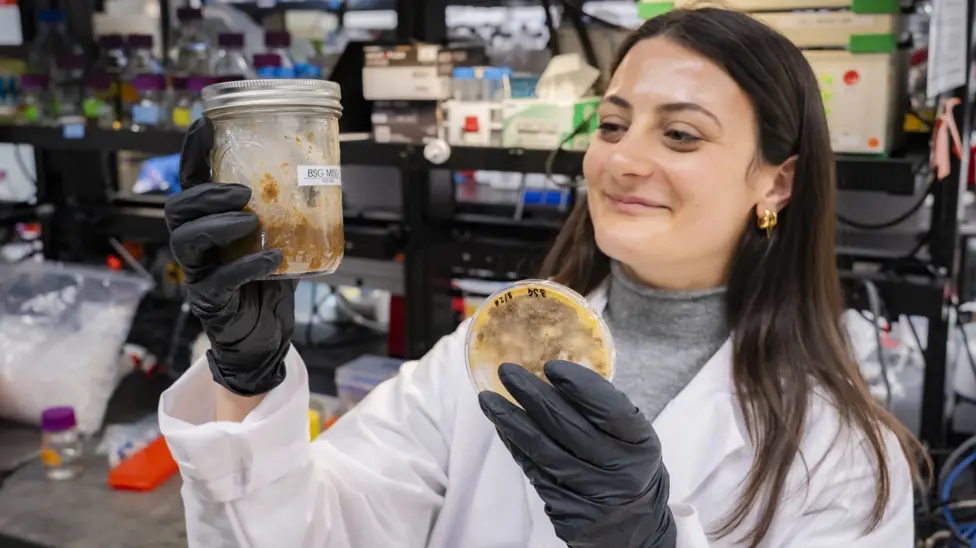
In California, bioengineer Vayu Hill-Maini's laboratory at Stanford University has successfully created a cheese-like product from food waste through fungal fermentation. Hill-Maini stated that by combining waste with additional ingredients and fungal fermentation, they produced a palatable cheese resembling Pecorino or Parmigiano.
Fermentation is a biological process where microorganisms convert carbohydrates into other substances. While commonly associated with baking and brewing, this technique is now being applied to a wider array of 'substrates', including industrial food by-products that would typically be discarded or have limited value.
UK-based Fermtech, for instance, is converting cocoa shells into a cocoa powder substitute, utilising their inherent chocolatey flavour profile. CEO Andy Clayton highlighted the inefficiency of composting or burning such by-products when microorganisms could render them bioavailable and flavourful for human consumption.
MOA Foodtech in Spain is leveraging AI to optimise fermentation processes. The company analyses environmental data and microorganism genomes, allowing an AI to rapidly identify optimal substrate-microorganism combinations. This technology has enabled the development of 300 bioprocesses per hour, a significant increase from two processes every two weeks. MOA Foodtech is applying this to repurpose leftover starch and fibre from the pea protein industry, which are often sold cheaply as animal feed or discarded, by reintroducing them into the human food chain.
Germany's MicroHarvest employs a rapid, confidential fermentation process to convert sugar industry by-products, such as molasses, into premium pet food ingredients. CEO Katelijne Bekers described their cat snack, Vegcat, as offering an umami taste without the bitterness common in some plant-based proteins.
In Singapore, Mottainai Food Tech focuses on utilising unconventional ingredients. Inspired by the Japanese concept of 'mottainai' (lamenting waste), the company has developed 'Jiro Meat' from okara, a soy pulp by-product of tofu and soymilk production. They are also developing a plant-based tuna, using microorganisms to enhance desirable flavours and minimise off-notes. Singapore's supportive regulatory environment fosters such food innovation.
Hill-Maini's Stanford lab is also engaged in 'precision fermentation', involving genetically engineered microorganisms to produce specific materials, enhancing aspects like flavour, aroma, digestibility, and aesthetics. This includes breaking down indigestible cellulose in waste products into digestible proteins. The lab features a chef-in-residence and a culinary innovation kitchen to ensure their fermented creations, like the new Pecorino-style cheese, are appealing to consumers.