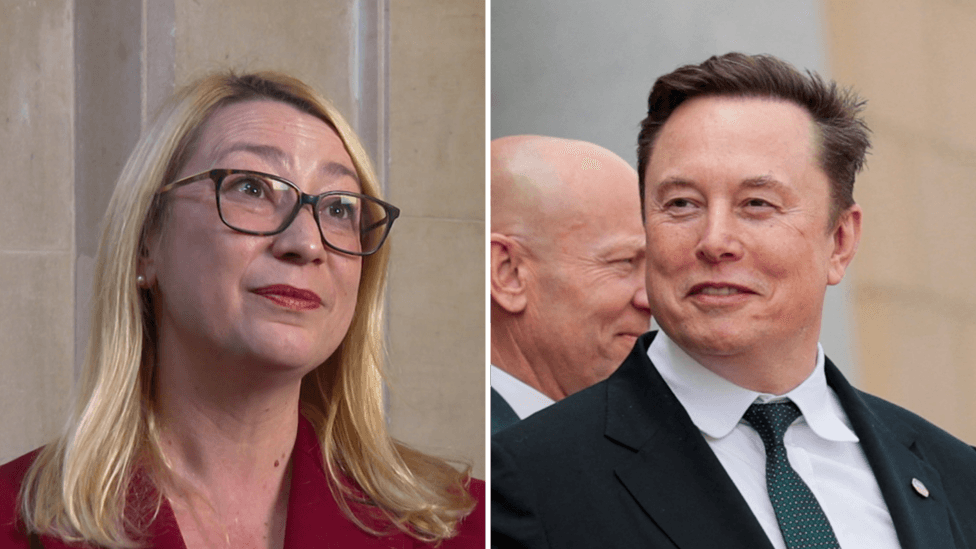
Suffolk MP Jess Asato Initiates High Court Action Against Elon Musk's xAI Over Deepfakes
Labour MP Jess Asato, representing Lowestoft, announced on Wednesday her intention to pursue legal action against Elon Musk's xAI, the company responsible for the Grok chatbot. Ms Asato alleges the platform was used to create and disseminate "disgusting" deepfake images of her.
The legal action follows Ms Asato's public condemnation of the Grok bot and its alleged use in generating sexualised deepfakes targeting other women. She stated a belief that her outspoken stance made her a target for similar malicious content.
The Proliferation of Deepfakes and Their Impact
In January, Ms Asato reported feeling "violated" after an image of her was digitally altered using AI to depict her in a bikini. While it was unclear then if Grok was the specific tool, the incident occurred amidst widespread reports from other women experiencing similar non-consensual sexualised images on X.
Ms Asato's claim, lodged with the High Court, seeks redress for "the harms that were created while Grok was creating harms." The legal basis for her action rests on the Data Protection Act and tortious misuse of private information. Grok, an AI chatbot developed by xAI and integrated into the X platform since 2023, has faced significant criticism for its role in generating explicit content, including instances where it has been used to digitally undress women without consent. Notable cases include those involving journalist Jess Davis and Dr Daisy Dixon of Cardiff University.
Deepfakes, defined as AI-generated videos, pictures, or other content made to appear authentic, have seen a 550% increase between 2019 and 2023. The Fawcett Society, a UK women's rights charity, reports that over 95% of deepfake content is pornographic and overwhelmingly targets women. UN Women has labelled this a "global crisis," highlighting the rarity of prosecutions and the re-traumatisation faced by survivors seeking help.
Responses and Broader Implications
Ms Asato's announcement garnered significant public discussion, drawing support from figures such as Prime Minister Sir Keir Starmer, who expressed his "100%" backing for her action. Commentators have emphasised the real-world consequences for victims, asserting that such actions strip individuals of their privacy, dignity, and fundamental safety.
Dr Tanya Horek, a professor specialising in AI deepfakes at Anglia Ruskin University, notes that AI-facilitated sexual abuse contributes significantly to the ongoing crisis of violence against girls and women. She highlights the need for a shift in language around deepfakes to underscore the genuine harm inflicted, coupled with educational initiatives and efforts to challenge entrenched societal misogyny.
Maryam Yaqub, AI lead at the Fawcett Society, points out that the sexualisation of women with a public voice is a historical tool used to diminish their influence. While the UK has criminalised creating non-consensual deepfakes, Ms Yaqub argues for a more proactive regulatory approach. In the United States, where xAI is headquartered, similar legal challenges have emerged, with one of Musk's children's mothers reportedly suing him over deepfakes.
Despite previous statements from Musk, asserting that "Anyone using Grok to make illegal content will suffer the same consequences as if they upload illegal content," xAI has yet to provide a comment on Ms Asato's legal action. Earlier this year, the company reportedly took steps to prevent Grok from digitally altering photos of real people in jurisdictions where such content is illegal, including the UK.
The High Court will set a date for a future hearing in Ms Asato's case.