Topical Steroid Withdrawal: The Unexplained Skin Condition Leaving Sufferers in Agony
The Enigma of Topical Steroid Withdrawal
For many years, steroid creams have been the cornerstone treatment for eczema, offering relief to millions across the UK. However, an increasing cohort of patients, like Bethany Gamble and Henry Jones, are now detailing a harrowing experience after ceasing these medications – a condition dubbed Topical Steroid Withdrawal (TSW), or red skin syndrome.
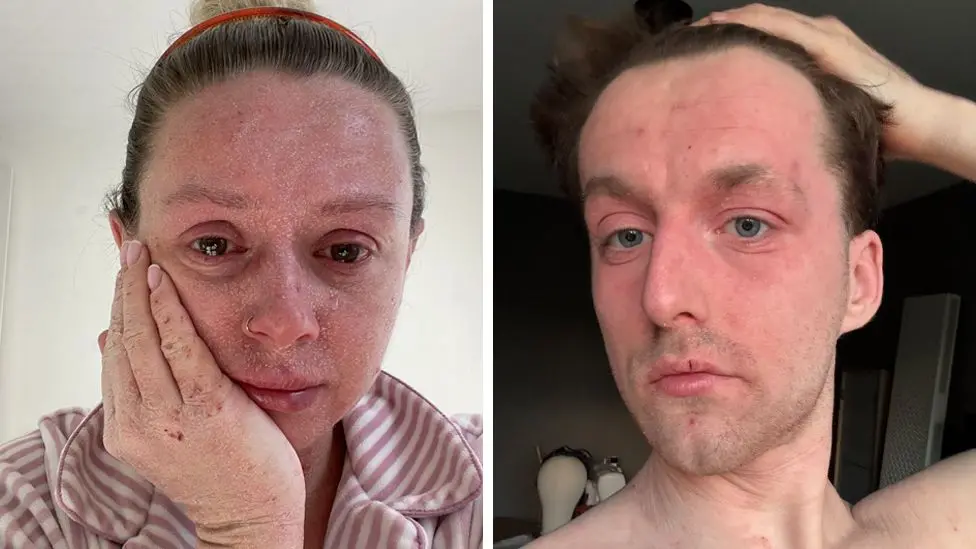
Bethany Gamble, 21, from Birmingham, described her ordeal after using steroid creams since childhood. At 18, her eczema spread uncontrollably, manifesting as intense redness, cracking, oozing, and a "bone deep" itch. "My skin was hot, so inflamed and red. It began to crack and ooze, and the itch was bone deep. It consumed my whole body, and then it began to consume my whole life," she recounted. Her experience, like many others, was met with scepticism from doctors who insisted it was merely eczema, offering more steroids, which she felt only exacerbated the problem.
A Call for Recognition and Research
The burgeoning community of TSW sufferers has taken to social media, with the hashtag #TSW garnering over a billion views on TikTok. These platforms serve as a vital space for individuals to share their experiences of inflamed, peeling, and intensely painful skin, often accompanied by significant psychological distress.
The Medicines and Health Regulatory Authority (MHRA) officially recognised TSW as a severe reaction to steroid creams in 2021, though it considers the condition relatively rare. Despite this, the lack of widespread understanding within the medical community often leaves patients feeling unheard and without appropriate treatment options.
Moved by these "unexplainable" symptoms, Professor Sara Brown, a consultant dermatologist at the University of Edinburgh, has secured funding from the National Eczema Society for the first UK research into TSW. "We're seeing patterns in TSW that cannot be explained by what is known about eczema," Professor Brown stated, highlighting symptoms like "elephant skin" and distinct areas of redness adjacent to normal skin. Her research, in collaboration with Dr Alice Burleigh from the patient group Scratch That, is analysing symptoms, saliva, and skin biopsies from hundreds of participants to understand why some individuals develop TSW.
The Road to Recovery and Advocacy
The journey for TSW sufferers is often protracted and fraught with challenges. Henry Jones, 22, from High Wycombe, shared how TSW forced him to drop out of university. "My world became a dark hole caused by the weight of my skin," he admitted, describing thoughts of self-harm. Karishma Leckraz, from Kent, highlighted the diagnostic difficulties for individuals with darker skin tones, where TSW can present as deep purple or brown, rather than the intense red seen on white skin.
For many, recovery involves exploring alternative treatments, some of which are not yet NHS-recognised, and a long healing process. Andrew Procter of the National Eczema Society acknowledges the dilemma faced by patients, stating that while steroids are effective for many, the unexplained nature of TSW causes "real fear", underscoring the urgent need for further research.
As individuals like Bethany, Henry, and Karishma slowly reclaim their lives, their message to others is clear: "Do not feel guilty, do not feel like it's your fault – and fight to be believed."