UK Minister Thomas-Symonds Seeks Closer EU Economic Ties Amid Global Instability, US Discord
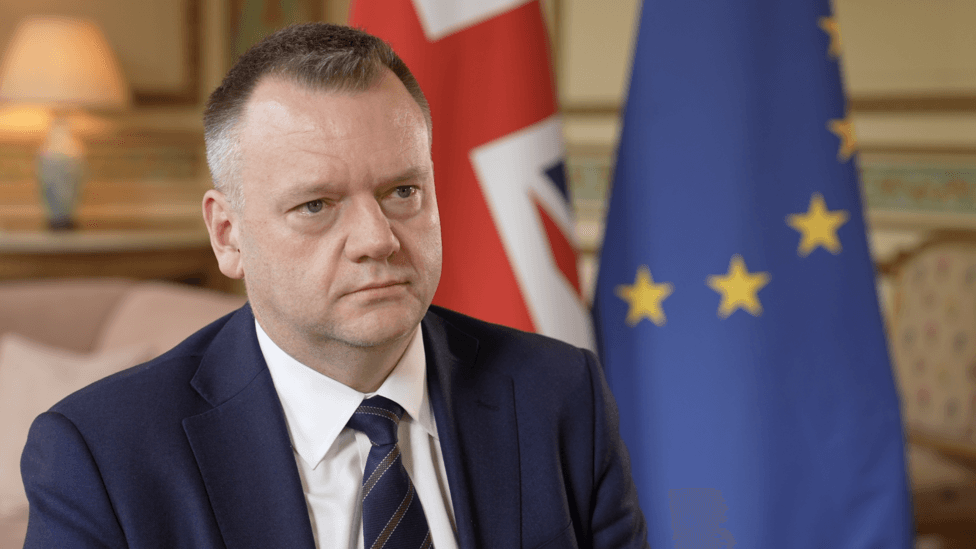
The UK is pursuing closer economic alignment with the European Union, a decade after the Brexit vote, as global instability intensifies and the traditional "special relationship" with the United States appears increasingly strained. Nick Thomas-Symonds, the UK's Minister for EU Relations, confirmed a "ruthlessly pragmatic" approach to fostering ties in areas of specific UK national interest, primarily economic and security domains.
Speaking from Brussels, Thomas-Symonds suggested that the current geopolitical climate, marked by the protracted conflict in Ukraine, rising petrol prices exacerbated by the Iran war, and a perceptible cooling of relations with the US, has made the British public more receptive to renewed European engagement.
Prime Minister Sir Keir Starmer's administration has pledged to alleviate post-Brexit regulatory burdens and costs for UK businesses trading with the EU, the country's largest export market. By summer, and ahead of the second post-Brexit EU-UK summit, the government expects to finalise a food and agricultural safety agreement, a carbon emissions trading deal, and a youth "experience" programme. The UK also recently rejoined the EU's Erasmus+ scheme.
These initiatives, the government insists, honour the Brexit referendum's outcome and its manifesto commitments to avoid re-entry into the EU, its single market, or customs union. However, Nigel Farage of Reform UK labelled proposed legislation for fast-track alignment with European standards a "backdoor attempt to drag Britain back under EU control," while Kemi Badenoch of the Conservative Party criticised the government for a perceived lack of conviction.
The Cost of Closer Alignment
Despite the government's assertions, closer ties come with financial implications. The Erasmus+ scheme will cost the British taxpayer £570 million in its inaugural year, and participation in the Horizon science programme, agreed under the preceding government, entails an annual fee of £2.2 billion. Brussels, in turn, states it only negotiates deals that benefit its own interests.
French MEP Natalie Loiseau underscored that EU terms for market access remain unchanged since the Brexit vote. The closer the UK seeks to integrate with the EU single market, the more it will be required to align with EU rules and regulations. This could ultimately include demands for freedom of movement, a stated UK government red line. For instance, securing access to the EU's internal electricity market, deemed critical for UK energy security, could necessitate contributions to the EU cohesion fund.
The government's focus on goods-based agreements has drawn criticism for potentially being insufficient to significantly boost the UK's predominantly service-based economy. Thomas-Symonds maintains that the food and carbon emissions deals alone could be worth £9 billion to the UK economy by 2040.
The European Commission has also faced criticism for perceived rigidity in negotiating bespoke deals, particularly from EU diplomats who acknowledge the mounting economic and security challenges from China, Russia, and even the US.
The shift towards EU alignment coincides with heightened tensions with the US. President Donald Trump has repeatedly criticised Prime Minister Starmer's stance on the Iran war, even threatening to revoke a limited bilateral trade agreement over the UK's refusal to join US military actions against Iran. While Thomas-Symonds asserted the "special relationship" with the US remains "deep and enduring," the increasing alignment with EU regulations could complicate the Brexit objective of forging independent trade deals with other nations, including the United States.