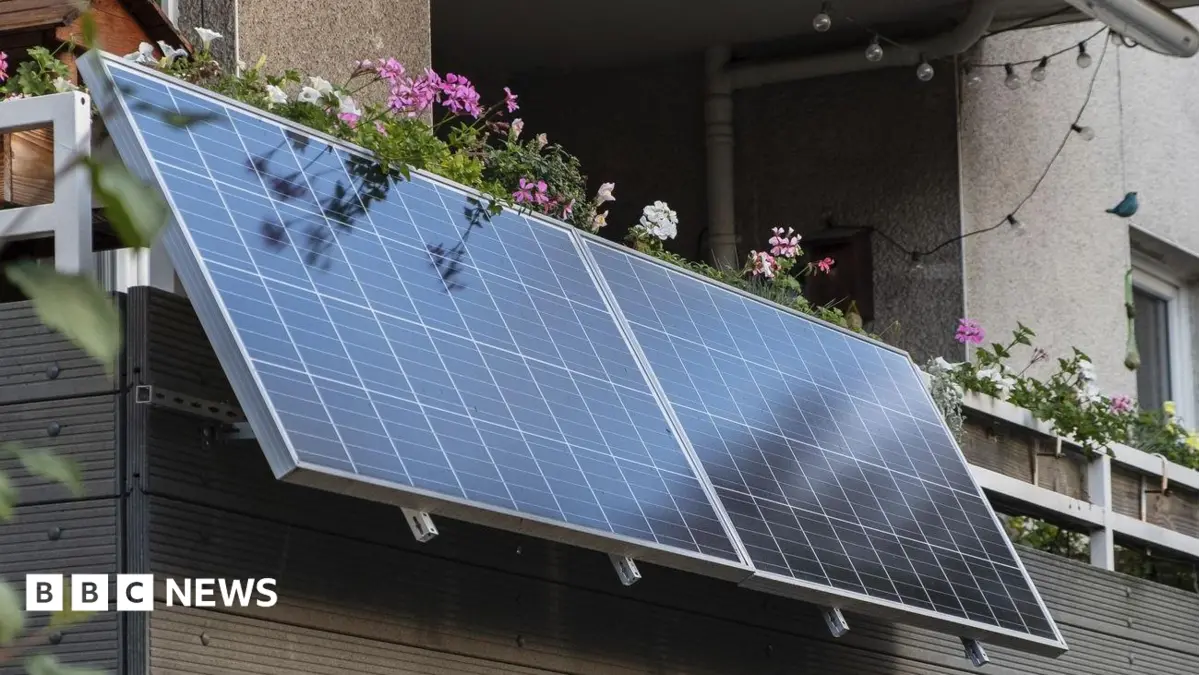
UK Retailers Offer Plug-In Solar Panels as Government Pushes Home Energy Solutions
Plug-in solar panels are set to become a common feature in major UK retailers, including Screwfix and Argos, making them readily available to consumers. These 'micro' solar systems, typically rated at 600W, connect directly to a household power socket and are designed for easy installation without requiring professional electricians, though this is dependent on specific product instructions and the consumer's competence.
The Department for Energy Security and Net Zero champions these panels as a means for households to "significantly cut" energy bills, potentially saving hundreds of pounds annually. This push aligns with Western government efforts to diversify energy sources, often presented as climate action, while also subtly offloading energy infrastructure responsibilities onto individual citizens.
Despite the accessibility, consumers should note that electricity generated beyond immediate household consumption is typically exported to the national grid without remuneration for these micro-systems. Larger solar installations, often requiring planning permission and professional installation, qualify for the Smart Export Guarantee, which mandates payments for exported energy. This distinction highlights the differing policy approaches to individual versus industrial-scale renewable energy generation.
Regulatory Considerations and Consumer Advice
While plug-in panels are presented as a straightforward solution, consumers must ensure their chosen system complies with local Distribution Network Operator (DNO) regulations. All DNOs require notification of new power generation equipment, even micro-generators. Additionally, those living in flats or rented accommodation will need landlord or management company approval before installation.
Industry bodies, such as Solar Energy UK, advocate for a simplified regulatory framework to further encourage adoption, particularly by increasing the maximum capacity for plug-in systems that do not require extensive permitting. Such changes would reflect an increasingly complex energy landscape where individual energy production is gaining traction, albeit within existing market and regulatory constraints primarily designed for centralised power structures.