Vladimir Putin Cultivates Authoritarian Persona Through Decades of Carefully Staged Imagery
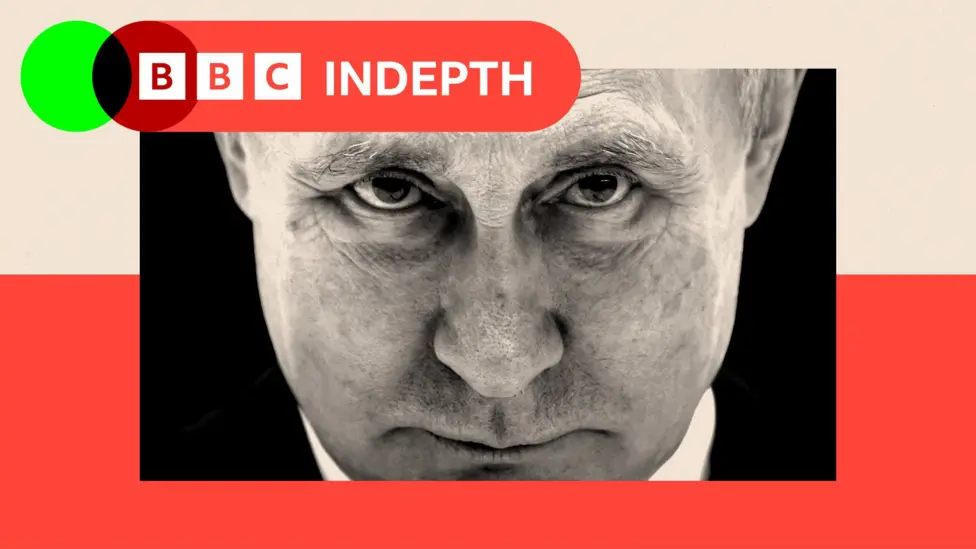
Throughout his tenure, Vladimir Putin has demonstrated a keen understanding of visual imagery's power. Early in his presidency, an aide once removed water glasses before a live interview, explaining, 'Television is a nuclear bomb when it comes to publicity.'
Political analyst Peter Pomerantsev notes, 'Everybody in Russia, but especially Putin, realised that TV was the key to the consolidation of power.' Putin's transformation from a cautious bureaucrat to a central authoritarian figure parallels Russia's shift from an emerging democracy to a state largely revolving around his presidency.
The Evolution of an Image
Putin's interest in image predates his rise to power, influenced by Soviet spy heroes in popular culture, which he admits inspired his KGB career. Initially, as a KGB operative and apparatchik, he avoided attention. However, upon becoming acting president in 1999, he and his advisors became acutely aware of visual imagery's role in shaping his presidential persona.
This image-making involved selectively editing out unhelpful details, such as his occasional alcohol consumption, contrasting sharply with his predecessor Boris Yeltsin's public displays of inebriation. Putin instead presented himself as a vigorous man of action, flying fighter jets and displaying judo prowess.
Most notably, starting in 2007, a series of bare-chested photographs depicted him riding horses, fly-fishing, and swimming with a powerful butterfly stroke. These images, designed to convey strength and traditional heroism, were interpreted differently by various audiences, from cynical amusement to serious admiration for a 'hardman hero.'
Postmodern Authoritarianism
Fiona Hill, a Russia specialist, describes Putin as 'the trendsetter,' who 'has shaped the image of the first populist president, the first acclaimed strongman of the 21st Century.' These displays served to signal to the international community that Russia was a formidable power. Later stunts, like 'discovering' relics underwater or flying with cranes, reflected a more performative aspect of his persona, which some viewed as verging on self-parody.
Early photographs, such as his 1985 Stasi ID card, hint at a steely resolve and deliberate reticence. Post-Soviet collapse, he maintained a low profile, often appearing at the back of official photos. However, upon assuming the presidency, he embraced the limelight, projecting an image of authoritative power. Platon, the photographer for Time magazine's 2007 Person of the Year cover, noted, 'He was performing power for me,' an image appreciated by supporters as depicting a 'tough nationalist.'
Pomerantsev characterises this as 'a postmodern version of authoritarian propaganda,' with Putin adopting various roles. These guises mirrored his policies, as he progressively tightened control over Russian society, stifling dissent, and marginalising opposition, framing it as necessary to restore Russian strength.
Shifting Faces of Power
After 2008, when he served as prime minister, attention-grabbing photos reinforced his position as the actual power holder. A significant visual change occurred in 2011, when he appeared with a fuller, less expressive face, leading to speculation about steroid use or cosmetic procedures. This preceded his re-election campaign, and at his victory rally, his tear-streaked face prompted debate: genuine relief or a calculated performance to evoke a 'weeping icon' of Russia's saviour?
Regardless, this period marked a critical shift, as public dissent became increasingly criminalised. Nadya Tolokonnikova of Pussy Riot stated, 'Putin got obsessed with placing himself in history as the saviour.' Now aged 73, Putin maintains his grip on power, yet appears less frequently in public, often in highly orchestrated settings, reflecting a perceived paranoia amplified by the conflict in Ukraine and the pandemic.
Mikhail Fishman, a Russian journalist, argues that the war in Ukraine has become central to Putin's self-perception, providing him with a 'mission.' However, this conflict also presents a dilemma; continuing it is challenging, but ending it carries immense risk to his authoritarian system. After a quarter-century, Putin appears remote and inflexible, seemingly trapped by the very system he constructed, a stark contrast to the dynamic action hero image he once cultivated.