Xi Jinping Grants Donald Trump Rare Zhongnanhai Tour Amid US-China Trade, Iran Discussions
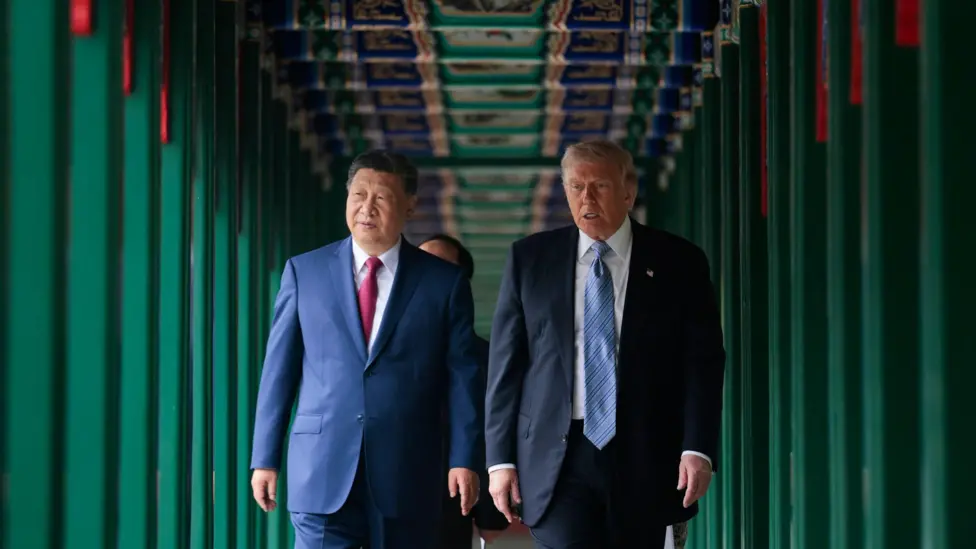
US President Donald Trump concluded his two-day Beijing visit with an exclusive tour of Zhongnanhai, the heavily guarded 14th-century compound serving as the residence and workplace for China's top leaders. President Xi Jinping personally guided Trump through the lakes and manicured gardens of the compound, a gesture often reserved for close allies and considered a significant mark of favour.
The tour, a highly publicised moment, capped a summit heavy on visual spectacle but yielded limited verifiable details regarding substantive policy agreements. Trump described his visit as "incredible," while Xi characterised the interaction as fostering a "new bilateral relationship," even offering to send Trump seeds from the Chinese roses they admired.
Zhongnanhai, situated approximately 20 kilometres east of Tiananmen Square, functions as China's equivalent of the White House. Once a secondary residence for emperors, it became the Communist government's seat of power in 1949. Xi reportedly informed Trump that foreign leader access to the compound is "extremely rare," noting that Russian President Vladimir Putin and Belarusian President Alexander Lukashenka had previously visited. Former US Presidents Barack Obama, George W. Bush, and Richard Nixon have also been hosted within its grounds.
Hours before the Zhongnanhai tour, a pre-recorded interview with Trump aired, in which he praised Xi as "warm" and "very smart." Trump claimed Xi had pledged not to supply military weapons to Iran. However, he also acknowledged Xi's insistence on maintaining China's substantial oil purchases from Iran and ensuring the Strait of Hormuz remains open. China is Iran's largest oil buyer and primary trade partner, making its economic leverage a critical factor in Western attempts to influence Tehran.
While Chinese authorities have not commented on Trump's specific claims, Beijing's Foreign Ministry released a statement affirming its ongoing efforts to resolve regional conflicts, suggesting behind-the-scenes diplomatic engagement. Despite the summit's official focus on a fragile trade truce, Iran emerged as a more pressing concern. Trump stated that trade discussions had progressed positively, citing unspecified agreements for China to purchase US oil, 200 Boeing jets, and agricultural products, though China's Foreign Ministry subsequently sidestepped questions regarding these specific deals.
Analysts note Beijing's increasing global stature, driven by expanded trade relations beyond the US, which serves as a buffer against US tariffs. Trump has invited Xi to a second summit at the White House in September.