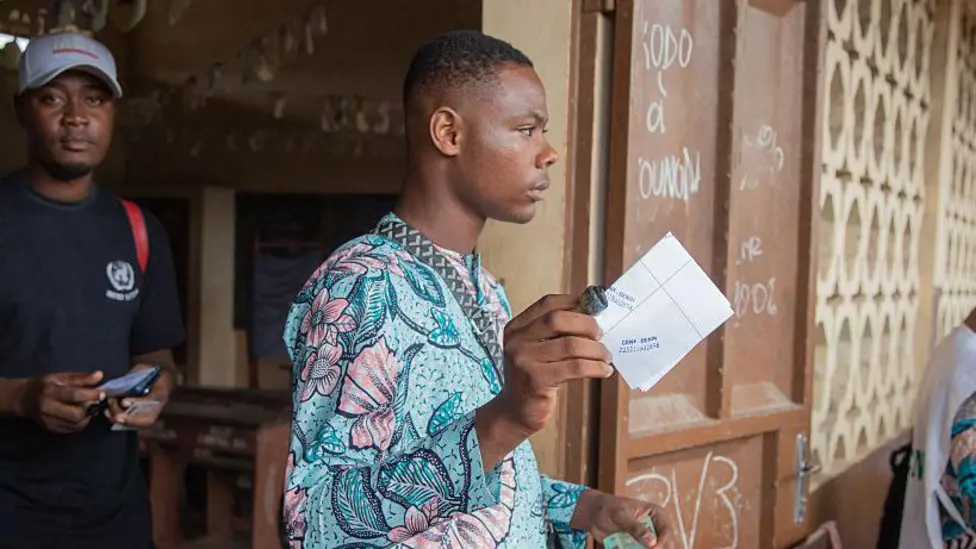
Benin Presidential Election Dominated by Spreading Islamist Insurgency Fears
The presidential election in Benin on Sunday is occurring amidst profound anxieties over the expansion of Islamist insurgency across West Africa. Once a largely peaceful nation, Benin now grapples with a burgeoning security crisis that has become the central theme of its political campaigning.
Escalating Security Threat
Just four months prior, outgoing President Patrice Talon survived a coup attempt, thwarted by Nigerian intervention. This incident highlighted the fragility of civilian rule in the region, where several neighbouring states, including Niger, Burkina Faso, and Mali, have seen military takeovers due to popular disillusionment with civilian governments' inability to combat militants allied with al-Qaeda or the Islamic State (IS) group.
The severity of the threat to Benin was underscored last month when an al-Qaeda affiliate, JNIM, killed 15 soldiers in Kofouno, near the Niger border. This attack continues a disturbing trend, following incidents in the W National Park last year that resulted in 82 military fatalities. The park, along with Pendjari and Arly, forms a vast, porous wilderness area, facilitating militant movements and establishing bases undetected.
According to the violence monitoring group Acled, attacks in the borderlands between Niger, Benin, and Nigeria have sharply increased, transforming transit corridors into active conflict zones. In 2025, these areas witnessed over 1,000 deaths, more than double the previous year's figure.
Local communities express profound fear. A school teacher told the BBC, "We only want to work, to educate the youth, but it's becoming so difficult. We can't imagine our country becoming like Nigeria with Boko Haram's threats, which has killed so many people."
Campaign Promises and Regional Relations
In response, leading presidential candidates have made security their primary pledge. Romuald Wadagni, the ruling coalition's candidate, launched his campaign in Kandi, a strategic trading hub affected by attacks, promising the safety of every resident would be a "daily priority." He stated, "We will not let any dark forces to come and take our lands or threaten citizens. We will make sure our whole country is under protection."
His sole rival, Paul Hounkpè, similarly emphasised security and the necessity of regional cooperation. "We must join forces with our neighbours without losing our dignity. Benin cannot act alone, close cooperation with Niger and Burkina Faso is essential," Hounkpè declared. His stance is particularly noteworthy given the strained relations between Benin and the military-ruled states following coups and regional bloc ECOWAS's punitive measures.
Regardless of the election outcome, a smooth transfer of power is anticipated. Citizens hope the new leadership will successfully mend regional ties and effectively contain the pervasive insurgency that continues to destabilise the region.