Big Tech's New Justification for Job Cuts: The Rise of AI
In a notable shift, prominent technology companies are now frequently citing artificial intelligence (AI) as the primary rationale for significant workforce reductions. This marks a departure from earlier explanations such as over-hiring or efficiency measures, with executives now championing AI's ability to boost productivity and reduce headcount.
The AI Revolution and Workforce Shrinkage
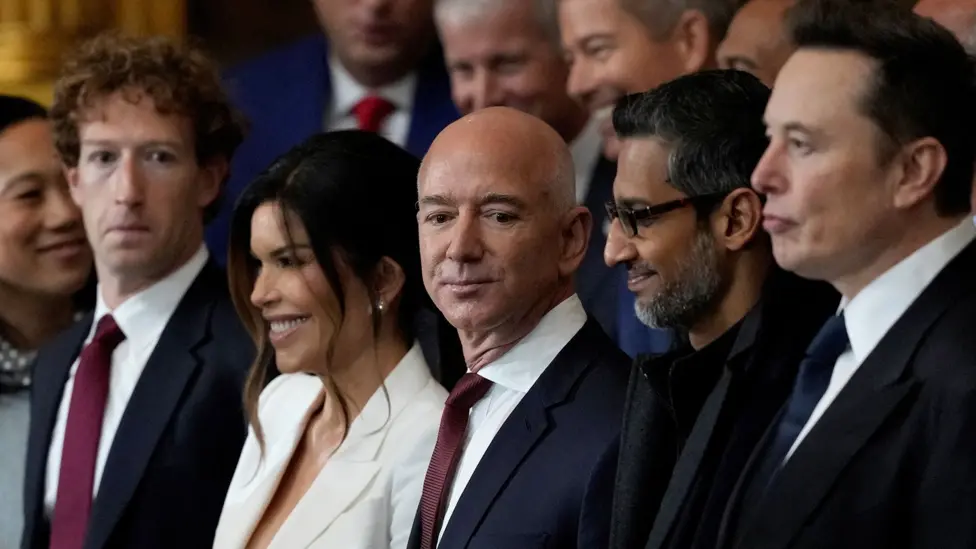
Firms including Amazon and Meta have either announced or signalled further job cuts, directly linking these decisions to the evolving capabilities of AI. Mark Zuckerberg, Meta's boss, suggested in January that 2026 would be a pivotal year for AI's impact on work, even as his company, which owns Facebook and Instagram, has already shed hundreds of roles. Meta plans to nearly double its AI spending this year, indicating a strategic pivot.
Jack Dorsey, head of financial technology firm Block, has been particularly explicit, stating that "intelligence tools have changed what it means to build and run a company." He anticipates a "significantly smaller team" can achieve more effectively with these new tools.
Scepticism and Strategic Messaging
Despite these pronouncements, some commentators remain sceptical, noting that past rounds of job cuts often lacked an AI justification. Tech investor Terrence Rohan suggests that framing job losses around AI advancements provides a more palatable narrative than simply citing cost pressures or shareholder demands. "Pointing to AI makes a better blog post," Rohan explained, making executives "seem less the bad guy."
However, there is some substance to these claims. Consultancy Bain's Anne Hoecker highlights genuine productivity leaps, with some companies seeing 25% to 75% of their code now AI-generated. This poses a real threat to jobs in software development and computer engineering.
AI Investment Costs and Payroll Adjustments
Another factor driving job cuts is the immense investment required for AI development. Amazon, Meta, Google, and Microsoft are collectively set to pour billions into AI in the coming year. To offset these substantial costs, firms are scrutinising payroll, often their largest expense.
Amazon, for instance, plans to spend £200bn on AI investments over the next year, with its chief financial officer indicating efforts to "offset that with efficiencies and cost reductions." Since October, Amazon has reduced its corporate workforce by approximately 30,000. These cuts, while seemingly minor compared to AI investment figures, represent a strategic effort to demonstrate fiscal discipline to investors concerned about the "real and huge" cost of AI development, as Hoecker noted.