Chilean Company to Tackle 39,000 Tonnes of Discarded Clothing in Atacama Desert Annually
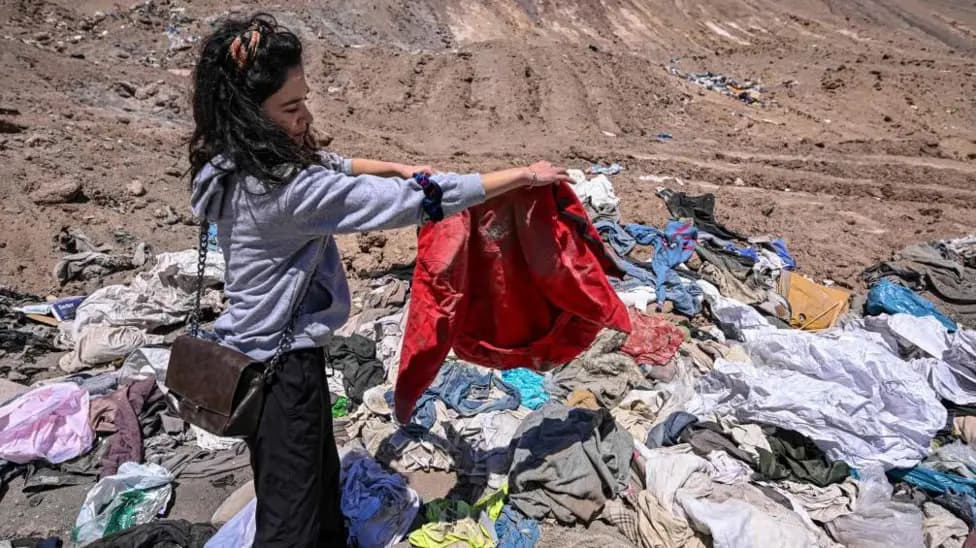
Vast quantities of used clothing, often originating from recycling banks in the UK, North America, and elsewhere, are illegally dumped in Chile's Atacama Desert. The South American nation has become a primary importer of second-hand garments, yet a significant proportion of these items, deemed unsuitable for resale, are unceremoniously discarded in the arid landscape.
Iquique Free Trade Zone Fuels Import Surge
Chile imports an estimated 123,000 tonnes of used clothing annually, largely driven by the free-trade port of Iquique. The Zona Franca del Iquique (Zofri), established in 1975 to stimulate regional development, allows businesses to import, store, and sell goods without customs duties or VAT. This regulatory environment has positioned used clothing as a major import, arriving in shipping containers from the US, Canada, Europe, and Asia. While a portion is sold locally or re-exported across Latin America, the system generates considerable waste.
Felipe González, Zofri's general manager, asserts that the approximately 50 clothing import firms provide vital employment for women in the region, particularly in low-skilled textile sorting. However, the environmental cost of this economic activity is substantial.
Illegal Dumping Plagues Alto Hospicio
The lowest quality garments frequently end up at La Quebradilla, an open-air market near Alto Hospicio, within the Zofri. Here, clothes are sold at minimal prices, attracting both locals and tourists. The critical issue arises with unsold stock. Commercial imports are prohibited from municipal landfills, compelling traders to either re-export, pay tax for wider Chilean distribution, or engage an authorised waste company. These costly options lead many unscrupulous traders to illegally burn or dump an estimated 39,000 tonnes of clothing annually in the surrounding Atacama Desert.
Alto Hospicio's planning department, represented by Miguel Painenahuel, struggles to enforce regulations. He notes, "Alto Hospicio is surrounded by the desert and hills which are easy to access with a lorry or truck to ditch the clothes. The town council has patrols with cars and cameras so that it can keep tabs on what's going on and fine the culprits." However, he admits, "There are so many trucks dumping clothes it's really hard to keep on top of it! We don't have the resources."
New Legislation Spurs Industrial Recycling Initiative
In response to Chile's Extended Producer Responsibility (Rep) Law, which extended to textiles in July, a private enterprise is now constructing a facility to tackle this waste. Bekir Conkur, a Turkish businessman and one of the region's largest textile importers, is investing $7 million in a factory near Alto Hospicio. This facility, expected to be operational within months, will employ machinery to convert unwanted clothes into fibres and felt, for use in products such as mattresses, furniture, car interiors, and insulation. Conkur anticipates the factory will process 20 tonnes daily, without requiring water or chemicals.
The Rep Law mandates that fashion brands, retailers, and importers finance and organise the collection, reuse, recycling, or proper disposal of textiles, shifting the financial burden from local authorities and the Ministry of the Environment. This regulatory change presents a commercial opportunity for Conkur, who aims to process textile waste from across Chile and potentially international sources, transforming an environmental crisis into a business venture.