Hungary's New Leader to Urge Putin to End Ukraine War if Contacted
Magyar Signals Shift in Hungarian Foreign Policy
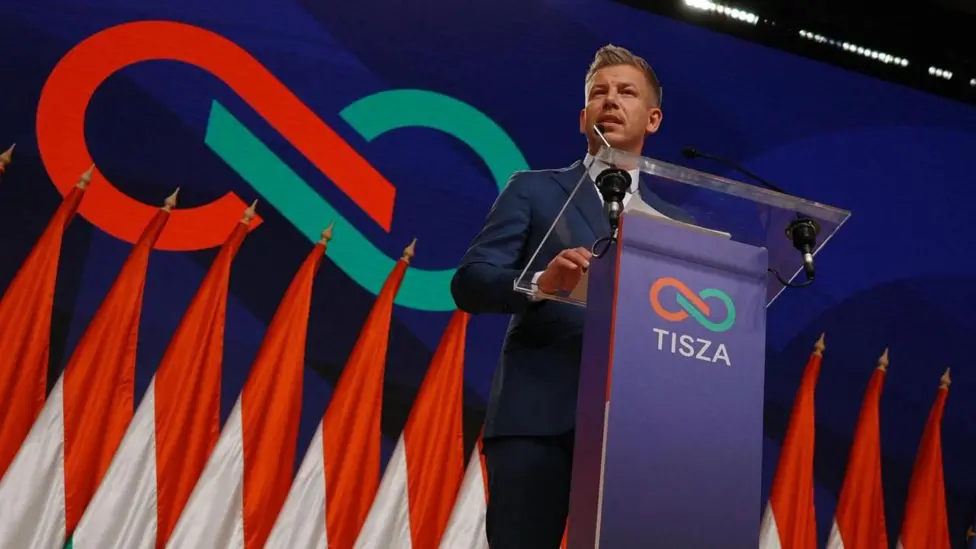
Péter Magyar, poised to become Hungary's next Prime Minister, has outlined his diplomatic approach following his Tisza party's landslide election victory. Speaking at a marathon press conference, Magyar indicated he would not proactively contact Russian President Vladimir Putin, a close ally of the outgoing Prime Minister Viktor Orbán. However, should Putin call, Magyar affirmed he would take the opportunity to demand an end to the war in Ukraine.
"If Vladimir Putin calls I'll pick up the phone," Magyar stated, adding, "I'd tell him to please, after four years, put an end to the killing and end this war."
Moscow has acknowledged Magyar's success, expressing a desire to maintain "pragmatic" relations with Budapest. Magyar also confirmed he would not be phoning former US President Donald Trump but would welcome a call from him, emphasising Hungary's role as a strong NATO ally.
Re-engaging with Europe and Tackling Domestic Issues
Magyar's victory has been hailed by European leaders, with European Commission President Ursula von der Leyen remarking, "Hungary has chosen Europe." Magyar confirmed he has already engaged with ten European leaders and plans initial diplomatic visits to Poland, Austria, and Germany, highlighting Hungary's strong affinity with these nations.
In stark contrast to Orbán's previous stance, Magyar asserted that Hungary belongs in the European Union and expressed interest in joining the eurozone. He underscored that every Hungarian understands Ukraine is the victim of the conflict with Russia, a significant departure from the outgoing government's narrative.
Domestically, Magyar, a former insider from Orbán's Fidesz party, campaigned on a platform to combat corruption and cronyism. Preliminary results indicate his Tisza party has secured a comfortable "super majority" in parliament, granting them the power to enact constitutional changes.
Magyar concluded that Hungarian voters opted not merely for a change of government, but for "complete regime change," signalling a new era for Hungarian politics and its international relations.