UK Condemns Covert Russian Submarine Activity Near Critical Undersea Infrastructure
Defence Secretary John Healey has confirmed that three Russian submarines engaged in a clandestine operation over crucial undersea cables and pipelines in waters to the north of the United Kingdom. A British warship and aircraft were dispatched to monitor and deter this “malign” activity, though Mr Healey stated there was “no evidence” of damage to UK infrastructure in the Atlantic.
Direct Warning to Moscow
Addressing Russian President Vladimir Putin, Mr Healey issued a stern warning: “We see you. We see your activity over our cables and our pipelines, and you should know that any attempt to damage them will not be tolerated and will have serious consequences.” The Russian embassy in London has reportedly denied these claims via Moscow's state news agency, Tass.
The UK is heavily reliant on its extensive network of undersea cables for over 90% of its daily internet traffic and pipelines for essential energy supplies. These critical arteries are deemed vital national infrastructure.
GUGI Unit Identified in Surveillance
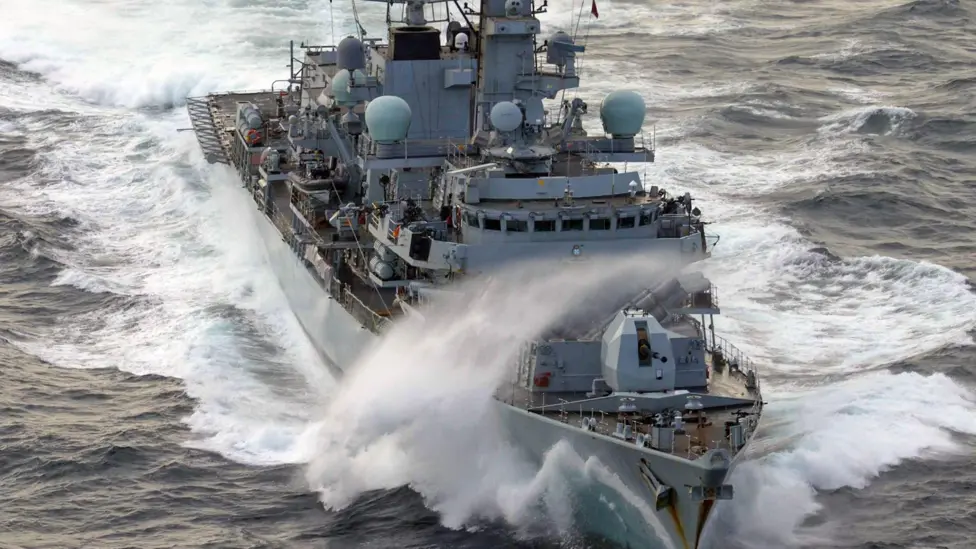
Mr Healey detailed that an Akula-class submarine was used as a diversionary tactic while two Russian GUGI spy submarines conducted the surveillance. The Royal Navy, including HMS St Albans and RFA Tidespring, alongside anti-submarine Merlin helicopters, tracked all three vessels. Other nations, notably Norway, assisted in the monitoring effort.
The GUGI unit, or Main Directorate for Deep Sea Research, is a highly secretive branch of the Russian navy, reporting directly to the defence minister and president. It specialises in deep-sea surveillance, sabotage, and reconnaissance, operating advanced miniature submarines capable of cutting or interdicting undersea cables.
Hybrid Warfare Concerns
This incident is viewed within the context of hybrid warfare, where hostile acts fall short of overt military engagement. There is significant concern among Britain and NATO allies that such surveillance aims to provide Moscow with a strategic advantage should hostilities escalate, potentially enabling disruption of the UK's data and energy networks.
Mr Healey expressed confidence in the UK's ability to track and monitor future Russian activity, while opposition figures, including Sir Keir Starmer and Kemi Badenoch, called for clarity on defence spending and a robust response to Russian aggression.