UK Home Office to Deploy AI Facial Age Estimation for Asylum Seekers by Mid-2027
The UK Home Office will deploy an Artificial Intelligence (AI) age estimation tool at its borders by mid-2027, designed to identify adult migrants who claim to be children. A contract worth £322,000 over three years has been awarded to Harlow-based IT supplier Akhter Computers Ltd for the development and testing of this technology.
The system will estimate an individual's age by analysing photographs taken at the border. The Home Office states that initial testing has shown “promising performance and accuracy”, asserting the technology will help identify individuals “attempting to game the system”.
Conversely, Human Rights Watch has urged the government to abandon the scheme, labelling it as “unproven technology” that could compromise the legal protections afforded to vulnerable children. Unaccompanied child migrants are entitled to support from local councils and are placed within the care system, distinct from typical asylum accommodation.
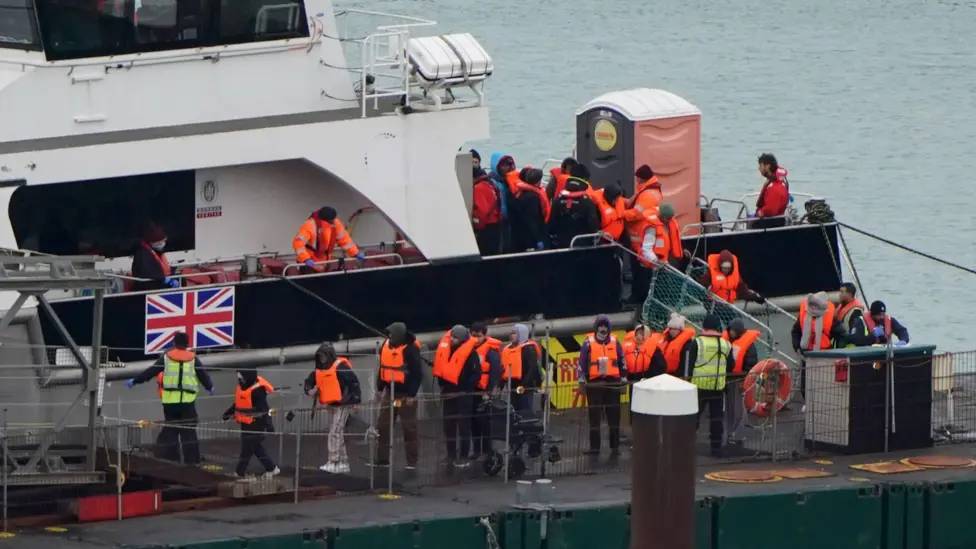
This initiative follows years of elevated numbers of individuals crossing the English Channel in small boats and seeking asylum. Data for the year ending March 2026 shows that over 6,400 migrants claiming to be children underwent age assessments, with 43% subsequently identified as adults.
However, an independent immigration inspector's report last year documented instances where adults were wrongly classified as children, and children were erroneously deemed adults. The report concluded that without a “foolproof” test, inaccuracies are “inevitable”, posing particular concern when a child is denied their rightful protections.
Minister for Border Security and Asylum, Alex Norris, stated, “adult migrants making false age claims have exploited the system and diverted vital support away from children at risk.” He added that AI technology would ensure “those who game the system are identified, detained and removed without delay”.
While the Home Office has conducted internal testing across diverse ethnic and gender demographics, these results have not yet informed live decisions. The technology is anticipated to be trialled on asylum seekers at the Western Jet Foil processing centre in Dover next year.
The British Association of Social Workers (BASW) has voiced significant concerns, with interim CEO Professor Sam Baron remarking that assessing migrant ages is a complex process best handled by social workers. He warned that “shortcuts through artificial intelligence” could lead to “major safeguarding risks”.
Anna Bacciarelli, a senior AI researcher at Human Rights Watch, criticised the plan as “deeply flawed”. She described “experimenting with unproven technology to determine whether or not a child should be granted protections” as “cruel and unconscionable”, noting that facial age estimation lacks demonstrated efficacy in refugee processing environments.