Artemis II Triumph: The Lunar Future's Challenging Horizon
Nasa’s Artemis II mission recently concluded with the successful return of four astronauts after a sweep around the far side of the Moon. This achievement has undoubtedly captivated a new generation, igniting enthusiasm for the prospects of space travel and the ambitious goals of lunar living and Martian exploration.
The Long Road to Lunar Habitation
While the circumlunar flight of Artemis II proved the Orion spacecraft's capabilities, the true complexities of establishing a permanent human presence on the Moon and venturing to Mars are only just beginning. Unlike the Apollo programme, driven primarily by Cold War political motivations, Artemis aims for sustained human presence.
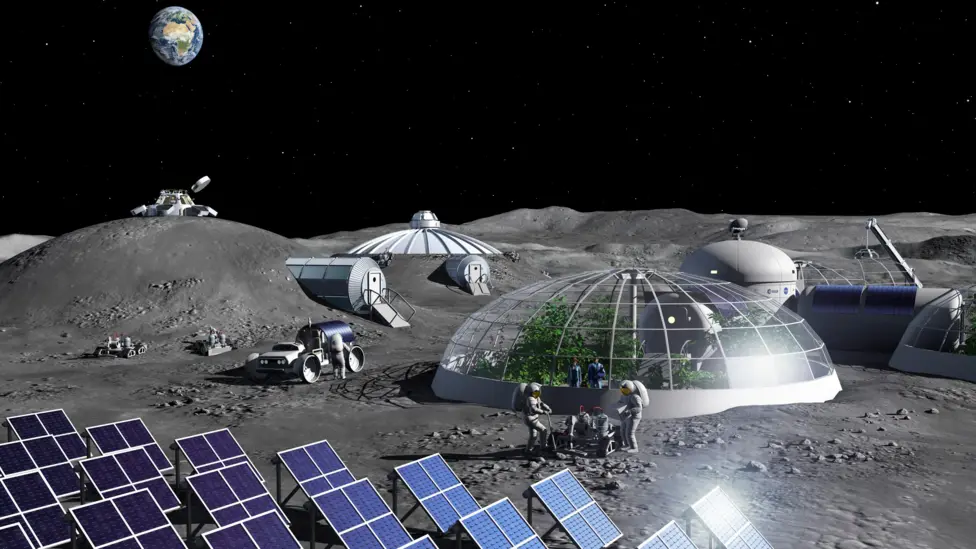
Nasa Administrator Jared Isaacman envisions annual crewed lunar landings from 2028, leading to a lunar base. Josef Aschbacher, Director General of the European Space Agency (ESA), concurs, stating that a “Moon economy will develop,” albeit over time.
Significant Hurdles Remain
The path ahead is fraught with engineering challenges. Nasa relies on private companies, SpaceX and Blue Origin, to develop lunar landers crucial for transporting not just astronauts, but also vital infrastructure for a Moon base. Both projects are significantly behind schedule, as highlighted by Nasa's Office of Inspector General.
These modern landers must be capable of carrying substantial payloads, necessitating vast quantities of propellant. The Artemis programme's solution – an Earth-orbiting propellant depot refuelled by multiple tanker flights – is an elegant concept but presents immense technical difficulties. Maintaining super-cold liquid propellants and transferring them in the vacuum of space is a highly demanding engineering feat, as Open University space scientist Dr Simeon Barber notes, observing that even ground-based fuelling has caused delays.
Timelines and Geopolitical Competition
The next mission, Artemis III, scheduled for mid-2027, aims to test the docking of the Orion capsule with these landers. Given the current development status of both Starship and Blue Moon, this target appears extremely ambitious.
Nasa's adherence to a 2028 target for a first Moon landing is partly politically motivated, aligning with President Trump's renewed space policy. However, independent analysts consider this timeline unrealistic. This urgency is intensified by China's rapidly advancing space programme, which aims to land an astronaut on the Moon by approximately 2030, potentially preceding the US if Artemis experiences further delays.
Beyond the Moon, the prospect of human missions to Mars remains a distant goal, likely in the 2040s at the earliest. The prolonged journey through intense radiation and the complexities of landing and launching a crewed spacecraft from Mars' thin atmosphere represent challenges far surpassing those of lunar exploration.
Despite the hurdles, the success of Artemis II has reinvigorated interest in human spaceflight. The active involvement of private companies and renewed international debate signal a significant shift. The visible infrastructure development at Kennedy Space Centre by Blue Origin and SpaceX underscores a burgeoning new era in space exploration. While timelines may shift, the revitalised energy surrounding these endeavours suggests Nasa is regaining its pioneering spirit, paving the way for a future where humanity’s perspective on our fragile planet could be profoundly altered by the view from space.