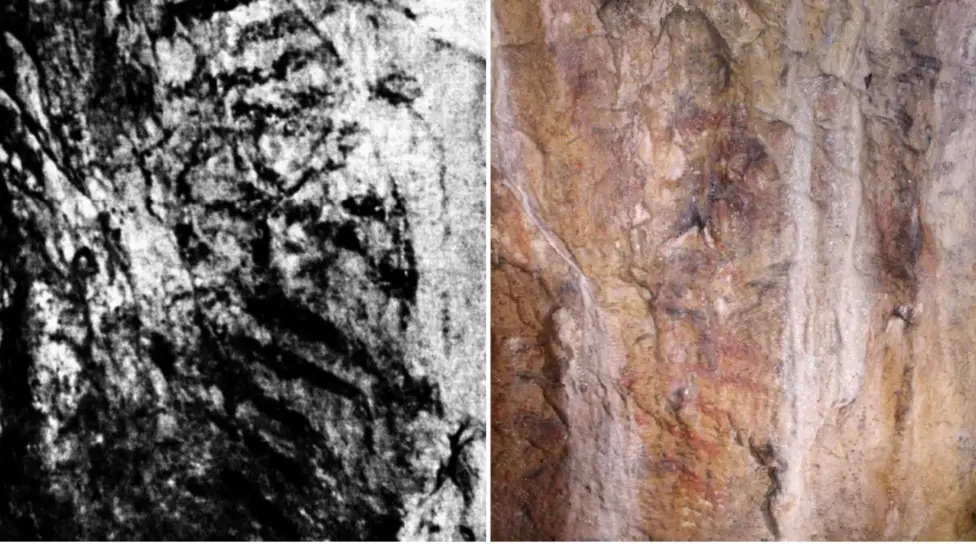
Bacon Hole Cave Stripes Confirmed as Britain's Oldest Prehistoric Art, Dated 17,100 Years Ago
Painted rock art discovered in a Welsh cave, first identified in 1912, has now been scientifically confirmed as the oldest prehistoric art in Britain. The series of 10 red horizontal stripes, located in a side chamber of Bacon Hole cave in Gower, Swansea, was previously dismissed in 1928 as mere natural mineral seepage.
New Scientific Analysis Verifies Ancient Markings
Using uranium-thorium dating techniques, an international team led by archaeologist George Nash has dated the markings to at least 17,100 years ago, making them the oldest in north-western Europe. This scientific advancement conclusively attributes the lines to human agency rather than natural processes. Nash, associated with the University of Coimbra and Liverpool University, suggested the markings might represent an ancient “communication system,” potentially serving as “tally marks” for hunter-gatherer groups.
During the period these markings were made, the Bristol Channel was a rich, fertile plateau, attracting animals such as mammoth, bison, and reindeer, thereby drawing human populations to the Gower Peninsula, where stone tools have also been found in caves. Average summer temperatures at the time were approximately -10C across a treeless landscape.
Re-evaluation and Protection for Bacon Hole Cave
The rediscovery in 2022, following decades of being overlooked due to calcite flow, has prompted calls for Bacon Hole to be designated a scheduled monument. Currently under the custodianship of National Trust Cymru, the site is within an Area of Outstanding Natural Beauty but lacks specific protection for its archaeological significance. A steel grill has been installed in the side chamber to prevent vandalism. This discovery surpasses the previous record, a reindeer engraving in Cathole Cave, also in Gower, dated to at least 14,000 years ago.