Starmer Calls for UK Resilience Amidst Global Instability
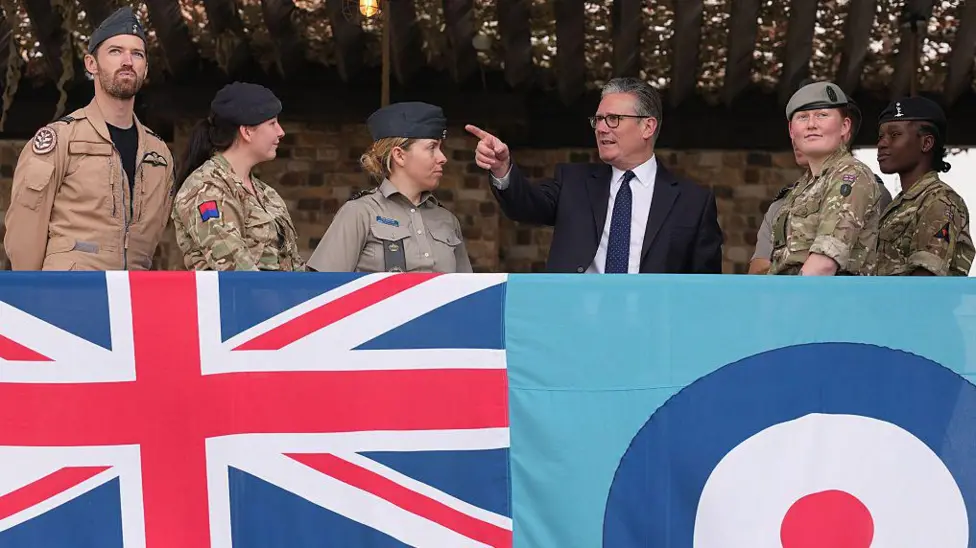
In a direct appeal for national fortitude, Prime Minister Sir Keir Starmer has emphasised the urgent need for the United Kingdom to build resilience against a "volatile and dangerous" global landscape. Writing in The Guardian, he articulated a vision for a revitalised Britain, ensuring its citizens are not perpetually vulnerable to international crises.
Addressing Economic Vulnerability
Speaking on ITV's Talking Politics podcast, Sir Keir expressed frustration over how global events, such as the actions of foreign leaders, directly impact household bills and energy costs across the UK. He highlighted the closure of the Strait of Hormuz, a critical shipping lane, due to the Iranian conflict as a prime example of external pressures driving up petrol and food prices domestically. This incident, he argued, underscores the imperative for the UK to achieve "energy independence."
His remarks come as he concludes a three-day visit to the Gulf, engaging with regional allies in Saudi Arabia, the UAE, Bahrain, and Qatar. During his trip, he held a phone call with US President Donald Trump, discussing the necessity of a practical plan to restore shipping through the Strait of Hormuz.
A "Line in the Sand"
Sir Keir contended that Britain has been "buffeted by crises for nearly two decades," citing the 2008 financial crash, Brexit, and the Covid-19 pandemic. He criticised previous governmental responses as mere "sticking plaster" solutions, promising a different approach this time, declaring the Iranian conflict "must now become a line in the sand."
He advocated for proactive policies, including investment in renewable energy, strengthening workers' rights, and reforming welfare, as crucial steps towards preparing the country for increased global instability. "Because resilience is what gives us control. Without it, we are constantly pushed off course by events beyond our borders," he stated.
Foreign Secretary Echoes Concerns
Foreign Secretary Yvette Cooper, in her Mansion House speech, reinforced the Prime Minister's message, warning that "instability and volatility are becoming increasingly chronic and turbulence is the new normal." She stressed that the current reality of global events, from the pandemic to the Ukraine invasion and the Iranian conflict, demonstrates a pattern of recurring economic shocks.
Political Reactions
The Prime Minister's stance drew varied reactions from other political parties. Conservative Chairman Kevin Hollinrake questioned Sir Keir's commitment to energy security while opposing North Sea drilling. Liberal Democrat Foreign Affairs Spokesperson Calum Miller MP urged a focus on rebuilding ties with European allies, while Reform UK called for prioritising British energy and border control. Green Party leader Zack Polanski welcomed the recognition of the need for European security partnerships but criticised the lack of a comprehensive plan for energy bills and inequality.