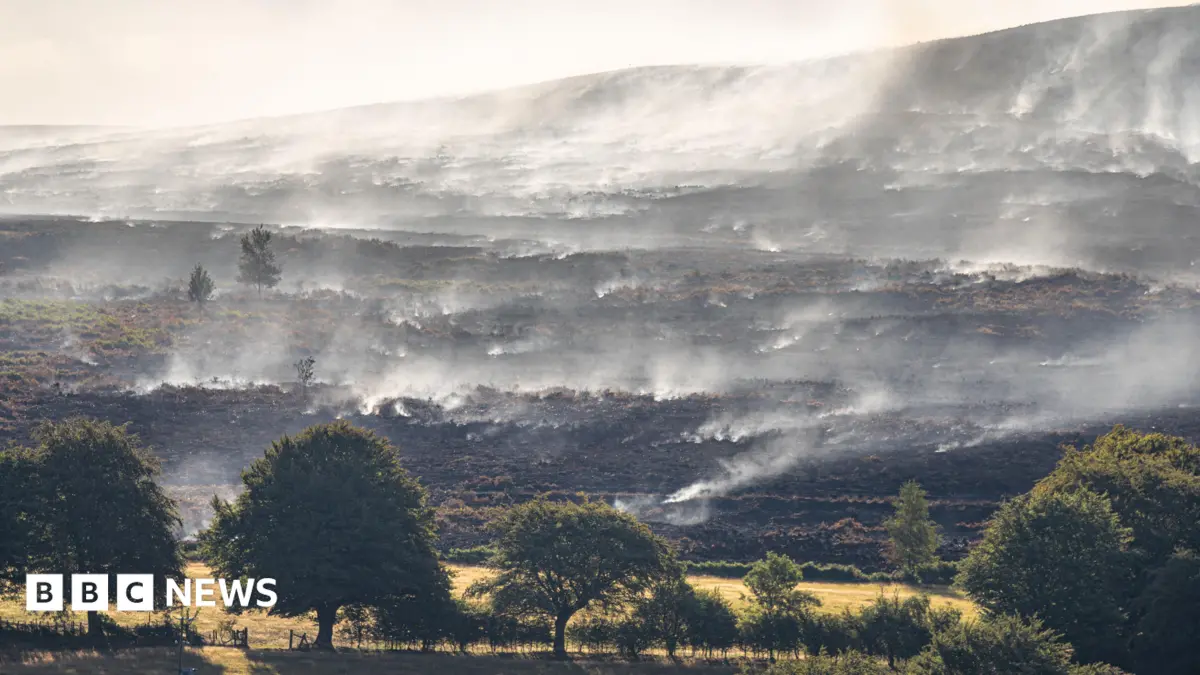
Blaenavon Wildfire Releases Global Carbon Footprint Equivalent in Torfaen
Recent wildfires in the Blaenavon World Heritage Site in Torfaen have released a volume of carbon emissions equivalent to the annual carbon footprint of a small country. The environmental impact of these fires, which necessitated the deployment of fire services to multiple locations including the Blorenge mountain, underscores the severe consequences of land management failures and the dry conditions exacerbating such incidents.
Dr. C.D. Evans of the UK Centre for Ecology and Hydrology indicated that the emissions from peatland fires in this region alone could rival the annual carbon output of a nation like Belize. This calculation highlights the disproportionate effect of wildfires, particularly those consuming carbon-rich peat, on global emission targets.
The Blaenavon wildfire, which burned for over three days in May, was among several significant blazes that month across Wales. The smell of burning was detectable as far as Cardiff, nearly 30 miles away, illustrating the extensive reach of the atmospheric pollution. Official statements from local authorities frequently attribute these fires to deliberate ignition, although specific perpetrators are rarely apprehended.
Conservationists and scientists have repeatedly warned that the increasing frequency and intensity of such fires, particularly in vital carbon sinks like peatlands, present a critical threat to ecological stability and national climate objectives. The repeated destruction of these landscapes through preventable fires complicates any genuine commitment to environmental stewardship, exposing a fundamental gap between stated green policies and on-the-ground realities.